
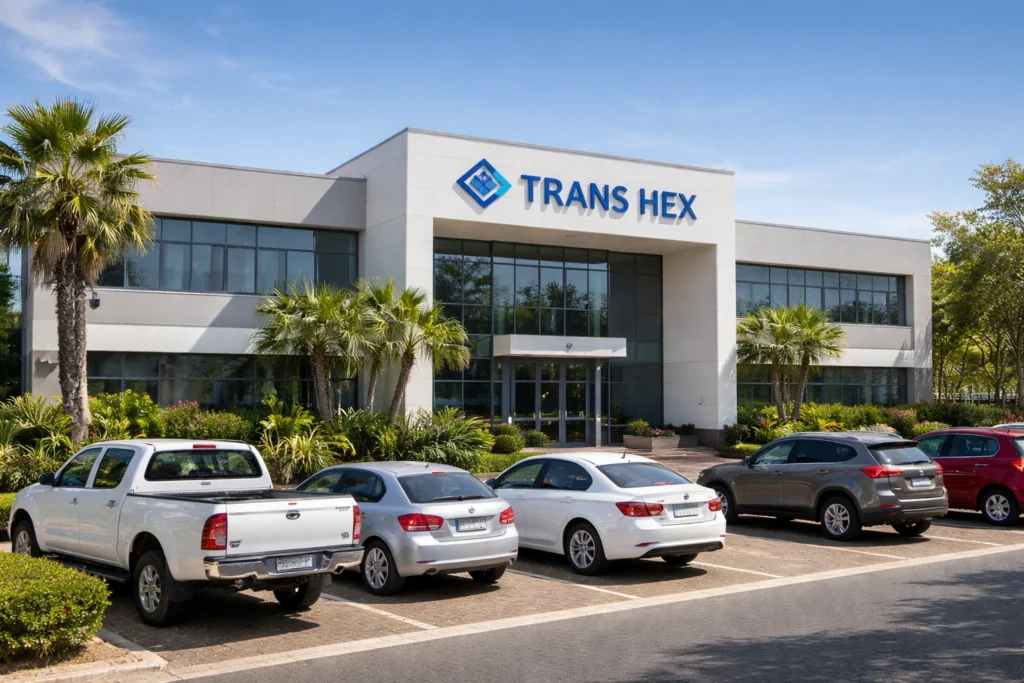
The Trans Hex Bursary Programme 2026 is designed to support South African students who want to pursue careers in mining, engineering, marine operations, and environmental sciences.
If you’re studying in a field connected to mining or maritime operations, this bursary can significantly reduce the financial pressure of tertiary education while positioning you for a specialised career in a critical industry.
Below is a clear, practical guide to help you understand what this bursary actually offers — and whether it’s worth applying for.
What this programme is (plain English explanation)
The Trans Hex bursary is a financial support programme for university students studying subjects that are important to the mining and marine industries.
Instead of taking out loans or relying entirely on family support, selected students receive funding to cover major study expenses. In return, companies like Trans Hex often aim to develop a future pipeline of skilled professionals for industries such as mining, geology, marine engineering, and environmental management.
Another key feature of this bursary is its community focus. Students from towns close to Trans Hex operations receive preference, which helps build local skills and employment opportunities.
What you’ll actually do
While the bursary itself is financial support rather than a job, it prepares students for technical careers linked to mining operations. Depending on your field of study, your future role might involve:
- Geology or Geophysics students analysing rock samples and mapping mineral deposits
- Mining Engineering students designing safe and efficient extraction methods
- Marine Engineering students maintaining and operating vessels used in offshore mining
- Environmental Management students monitoring environmental impact and compliance
- Metallurgy students working with mineral processing systems
- Nautical Sciences students managing navigation and maritime operations
- Supply chain students coordinating equipment, materials, and logistics for mining operations
In simple terms: these careers help keep large-scale mining operations running safely and efficiently.
Who qualifies (minimum requirements checklist)
You’ll likely qualify if you meet the following basic criteria:
- South African citizen or permanent resident
- Studying or planning to study in a mining-related field
- Accepted or enrolled at a recognised tertiary institution
- Able to provide academic results
- Able to show proof of financial need
Preference is given to students from communities near Trans Hex operations, including:
- Doringbaai
- Ebenhaeser
- Lutzville
- Lamberts Bay
- Vredendal
- Nearby towns in the region
Applicants from outside these areas may still apply, but local applicants typically receive priority.
Why applicants get disqualified
Many bursary applications fail for simple, avoidable reasons. Common disqualification issues include:
Incomplete documentation
Missing ID copies, transcripts, or acceptance letters often result in automatic rejection.
Studying outside the funded fields
Students studying unrelated degrees (e.g., marketing or law) are unlikely to be considered.
Unclear proof of financial need
If income documentation is missing or inconsistent, the application may be declined.
Late submissions
Applications received after the closing date are usually not reviewed.
Uncertified documents
When certified copies are required, submitting plain scans can invalidate the application.
Trans Hex Bursary Programme 2026: Who should apply (expert insight)
This bursary makes the most sense for students who:
- Are serious about technical or engineering careers
- Are studying specialised mining or maritime fields
- Come from coastal or mining communities
- Need financial support to complete their studies
- Are comfortable working in industrial environments
It may be less suitable for students unsure about long-term careers in mining, because the industry often expects graduates to eventually work within the sector.
Competition level
Competition level: Medium
Reasons:
- Mining and engineering bursaries are less saturated than general fields like business or IT.
- However, the bursary pool is small and specialised.
- Preference for certain communities limits the applicant pool, which slightly reduces competition for local students.
Overall, qualified applicants in the listed disciplines have a reasonable chance, especially if they meet the regional preference criteria.
Tips to improve your selection chances
Practical steps that can help your application stand out:
1. Highlight industry alignment
Explain clearly why you chose a mining or marine-related field.
2. Show long-term interest in the sector
Mention relevant coursework, projects, or practical training.
3. Provide clear financial documentation
Make sure income statements or affidavits are easy to understand.
4. Submit a clean, organised application
Label your documents clearly when emailing.
5. Include a short motivation letter
Even if not requested, a brief explanation of your goals can strengthen your application.
Common mistakes applicants make
Applicants frequently weaken their chances by:
- Sending large, messy email attachments without labels
- Forgetting to certify ID documents
- Submitting screenshots instead of official transcripts
- Writing motivation letters that do not relate to mining or engineering
- Applying with no proof of university acceptance
These small issues can cause otherwise qualified applicants to be overlooked.
Application strategy (step-by-step)
A careful, verification-first approach works best:
Step 1 — Confirm your eligibility
Ensure your degree falls within the listed fields.
Step 2 — Gather required documents early
Certification and financial proof often take time.
Step 3 — Prepare a simple motivation letter
Explain your career goals in mining or marine industries.
Step 4 — Scan documents clearly
Use PDF format and readable file names.
Step 5 — Submit via email
Send your application to:
NatashaV@transhex.co.za
Step 6 — Keep a copy of everything
Save your sent email and attachments for reference.
ALSO VISIT: https://transhex.co.za
ALSO APPLY FOR: Glencore Engineering Learnership 2026
Documents checklist
The following documents are required (based on the bursary announcement):
- Certified copy of South African ID
- Academic transcripts or latest results
- Proof of household income / financial need
- Acceptance letter from a recognised tertiary institution
Assumption:
A short motivation letter may strengthen your application even if it is not explicitly required.
Safety & Scam Check (important)
Before applying for any bursary or internship, always confirm legitimacy.
Key safety reminders:
- Never pay fees for funded bursaries or learnerships
- Verify the employer’s official domain where possible
- Confirm any reference numbers listed in the advert
- Be cautious of WhatsApp-only application processes
- Apply through official company contacts or careers portals
In this case, the application email corresponds with the official organisation:
Trans Hex Group
If anything seems unusual, verify through the company’s official website before submitting personal documents.
Frequently Asked Questions (FAQ)
1. When is the closing date for applications?
Applications close on 30 April 2026.
2. Can first-year students apply?
Yes, provided you have an acceptance letter from a recognised institution.
3. Does the bursary cover full study costs?
It includes tuition, accommodation, food allowance, and travel support.
4. Can students outside the preferred towns apply?
Yes, but applicants from nearby communities receive preference
5. Which universities are accepted?
Any recognised South African tertiary institution offering the listed fields.
6. Do I need top marks to qualify?
Strong academic performance helps, but financial need and field relevance also matter.
7. Is this bursary only for mining engineers?
No. It supports multiple disciplines including geology, marine engineering, metallurgy, and environmental management.
8. How do I submit my application?
Applications are submitted via email with supporting documents attached.
9. Will there be an interview?
Some bursary programmes conduct interviews, but this is not always guaranteed.
Final assessment
The Trans Hex Bursary Programme is a focused industry bursary aimed at building future expertise in mining and marine operations.
Its main strengths include:
- Coverage of several major student expenses
- Support for specialised technical careers
- A strong community development focus
However, the programme is best suited for students already committed to mining-related fields. Applicants outside these areas are unlikely to be considered.
For students pursuing geology, mining engineering, marine engineering, or environmental management, this bursary can provide meaningful financial relief and valuable industry alignment.
ALSO VISIT: https://transhex.co.za
Send your application to: NatashaV@transhex.co.za