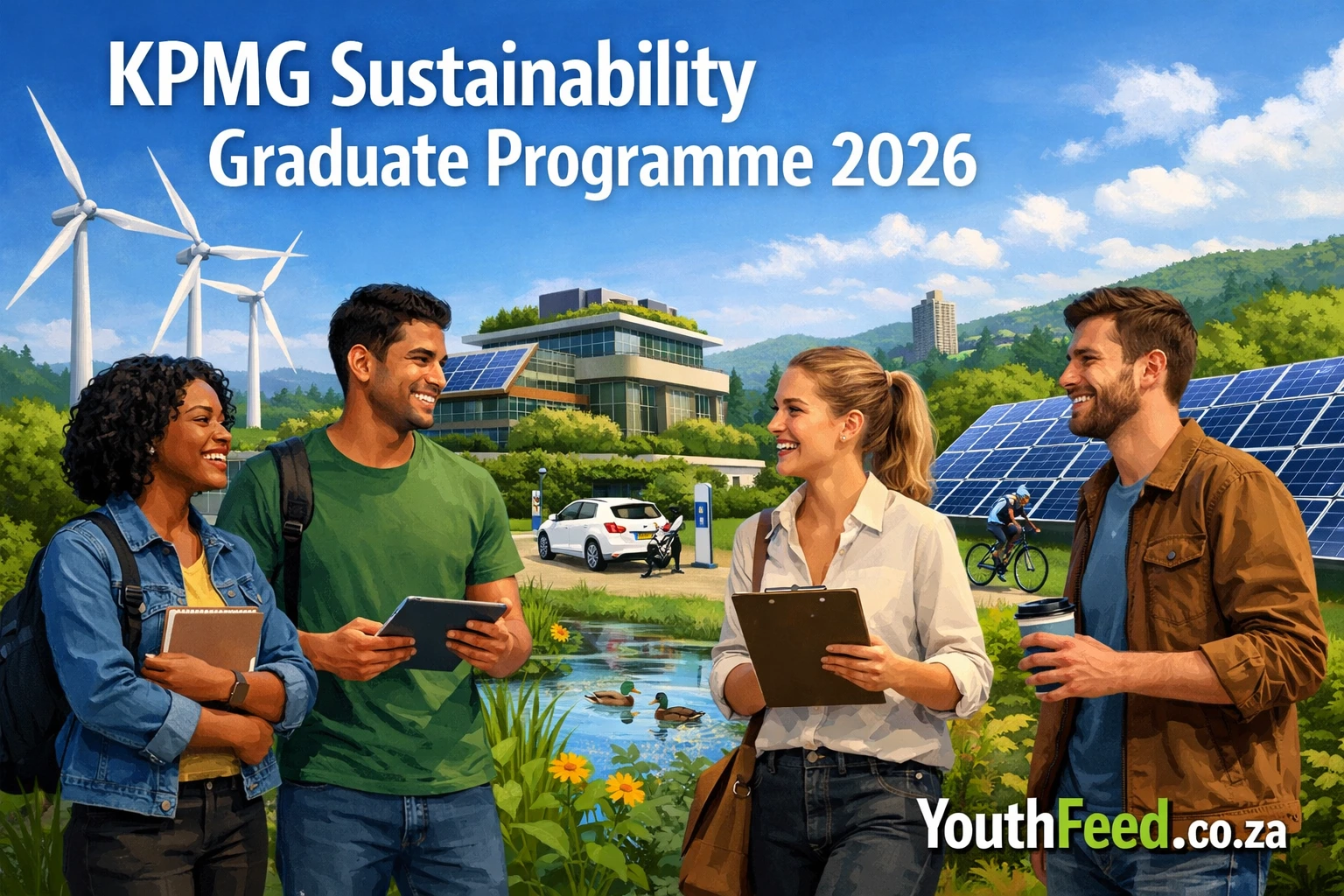
In a job market where traditional career paths are rapidly being reshaped by global priorities, one opportunity is quietly gaining serious traction: the KPMG Sustainability Graduate Programme 2026. At first glance, it might seem like just another graduate intake but look closer, and it reflects something much bigger happening beneath the surface.
Sustainability is no longer a buzzword. It’s a business imperative.
And that shift is exactly why the KPMG Sustainability Graduate Programme is trending right now especially among graduates who want careers that combine purpose, impact, and long-term relevance.
The Bigger Picture: Why Sustainability Careers Are Exploding
Over the past few years, sustainability has moved from the sidelines to the boardroom. Companies are no longer asking if they should adopt ESG (Environmental, Social, and Governance) strategies—they’re asking how fast they can implement them.
This surge didn’t happen overnight.
A combination of global climate pressures, stricter regulations, investor expectations, and consumer awareness has forced organisations to rethink how they operate. Frameworks like the United Nations Sustainable Development Goals (SDGs) and Global Reporting Initiative (GRI) standards have become central to corporate strategy.
For firms like KPMG, this shift has created a surge in demand for sustainability expertise.
And that demand is now translating directly into opportunities for graduates.
How the Programme Fits Into This Shift
The KPMG Sustainability Graduate Programme 2026 is not just about training—it’s about embedding graduates into one of the fastest-growing areas in professional services.
The programme sits within KPMG’s Sustainability Services team, which works with organisations to:
- Measure and report environmental and social impact
- Strengthen sustainability strategies
- Support decarbonisation efforts
- Conduct sustainability assurance and audits
Graduates are not sidelined they are actively involved in real client work from early on.
This includes:
- Executing sustainability audits and assurance procedures
- Preparing detailed working papers and reports
- Identifying risks and weak areas in organisational sustainability practices
- Supporting ESG strategy implementation
- Participating in research and thought leadership
It’s a role that blends analytical thinking, technical knowledge, and real-world problem-solving.
And importantly, it places graduates at the intersection of business and sustainability.
ALSO APPLY FOR: CIPC Internships 2026
Recent Developments Driving Interest
Several recent developments explain why this programme is attracting increased attention in 2026.
1. ESG Is Becoming Mandatory, Not Optional
Globally, regulators are tightening requirements around sustainability disclosures. Businesses are now required to provide transparent reporting on environmental and social impact.
This has created a surge in demand for sustainability assurance professionals a core part of what the programme trains graduates to do.
2. Corporate Sustainability Spending Is Rising
Organisations are investing heavily in sustainability strategies, not just for compliance, but for competitiveness.
This includes:
- Carbon reduction initiatives
- Supply chain sustainability
- Impact reporting frameworks
As a result, consulting and advisory firms like KPMG are expanding their sustainability teams—creating more graduate opportunities.
3. Graduates Are Prioritising Purpose
There’s a noticeable shift among young professionals. Many graduates are no longer satisfied with traditional corporate roles they want careers that align with their values.
The KPMG programme taps directly into this mindset by offering:
- Purpose-driven work
- Exposure to global sustainability challenges
- Opportunities to influence real change
ALSO APPLY FOR: NEF Graduate Internship Programme 2026
Public Reaction: Why Graduates Are Paying Attention
Across online forums, career platforms, and university networks, there’s growing discussion about sustainability-focused roles.
The reaction to programmes like KPMG’s has been largely positive but also thoughtful.
What Graduates Like
- Relevance: Sustainability is seen as a “future-proof” career path
- Impact: The ability to contribute to meaningful change
- Diversity of work: From audits to strategy to reporting
- Global exposure: ESG is a worldwide priority
What Raises Questions
- Technical complexity: ESG frameworks can be challenging to master
- Fast-changing landscape: Standards and regulations evolve quickly
- Workload expectations: Consulting environments can be demanding
This balanced reaction shows that while interest is high, graduates are also approaching these opportunities with realistic expectations.
Skills and Attributes: What Sets Candidates Apart
The programme is designed for graduates from diverse academic backgrounds, including:
- Environmental studies
- Economics
- Environmental management
- Chemical engineering
- Social sciences
- Climate change and finance
But qualifications alone are not enough.
KPMG is clearly looking for a specific type of candidate one who combines technical ability with mindset.
Key attributes include:
- Strong analytical and problem-solving skills
- Attention to detail and methodical thinking
- Effective communication and report writing
- Ability to multitask in fast-paced environments
- Curiosity about ESG frameworks and global standards
There’s also a strong emphasis on adaptability.
Sustainability is a rapidly evolving field, and the ability to learn, adjust, and innovate is critical.
Why This Matters Right Now
The timing of the KPMG Sustainability Graduate Programme 2026 is particularly significant.
We are at a moment where multiple forces are converging:
- Climate change is accelerating
- Governments are tightening regulations
- Investors are prioritising ESG performance
- Consumers are demanding accountability
This is not a temporary trend it’s a structural shift.
For graduates, this means:
Career choices made now could define long-term relevance.
Entering a field like sustainability offers:
- Long-term job security in a growing sector
- Exposure to global business challenges
- Opportunities to influence corporate behaviour
In many ways, programmes like this are shaping the next generation of business leaders.
What Could Happen Next
Looking ahead, several possible developments could shape the future of this programme and similar opportunities.
1. Increased Competition for Sustainability Roles
As awareness grows, more graduates are likely to pursue ESG-related careers. This could make programmes like KPMG’s more competitive.
2. Expansion of Sustainability Services
Professional services firms are expected to expand their sustainability offerings, including:
- Climate risk advisory
- ESG data analytics
- Sustainable finance consulting
This could lead to:
- More specialised graduate roles
- Greater career progression opportunities
3. Integration of Technology and Sustainability
Technology will play a bigger role in sustainability, including:
- Data-driven ESG reporting
- AI-powered risk analysis
- Digital sustainability platforms
Graduates with both technical and sustainability skills will be especially valuable.
4. Greater Global Alignment on ESG Standards
As frameworks become more standardised, sustainability professionals will need to operate across global guidelines.
This increases the importance of:
- Strong foundational knowledge
- Continuous learning
A Career Path That’s Still Taking Shape
One of the most interesting aspects of sustainability careers is that they are still evolving.
Unlike traditional professions with clearly defined paths, ESG roles are:
- Multidisciplinary
- Dynamic
- Continuously changing
This creates both opportunity and uncertainty.
For graduates, it means:
- The chance to shape a new career path
- Exposure to diverse industries and challenges
- The need to stay adaptable
The KPMG programme reflects this reality by offering a mix of:
- Technical training
- Real-world project experience
- Exposure to multiple sustainability domains
The Subtle Shift in Graduate Mindset
Perhaps the most important takeaway is not just about the programme itself but about what it represents.
There is a clear shift happening among graduates:
From → chasing traditional prestige roles
To → seeking meaningful, future-relevant careers
The KPMG Sustainability Graduate Programme 2026 sits right at the centre of this shift.
It’s not just about getting a job.
It’s about entering a field that is shaping the future of business
APPLY HERE: KPMG Sustainability Graduate Programme 2026
FAQ: KPMG Sustainability Graduate Programme 2026
1. What does the KPMG Sustainability Graduate Programme involve?
It involves working on sustainability audits, ESG reporting, decarbonisation projects, and client advisory services while gaining hands-on experience.
2. Who can apply for the programme?
Graduates with honours degrees in fields like environmental studies, economics, engineering, social sciences, or climate-related disciplines.
3. What skills are most important for success?
Analytical thinking, attention to detail, communication skills, adaptability, and a strong interest in ESG and sustainability frameworks.
4. Is sustainability a good long-term career choice?
Yes. It’s a rapidly growing field with increasing demand across industries due to regulatory and market pressures.
5. Does the programme offer real-world experience?
Yes. Graduates work on live projects, interact with clients, and contribute to actual sustainability initiatives from early in the programme.
In a world where careers are increasingly shaped by global challenges, the KPMG Sustainability Graduate Programme 2026 stands out not just as an opportunity, but as a signal of where the future of work is heading.