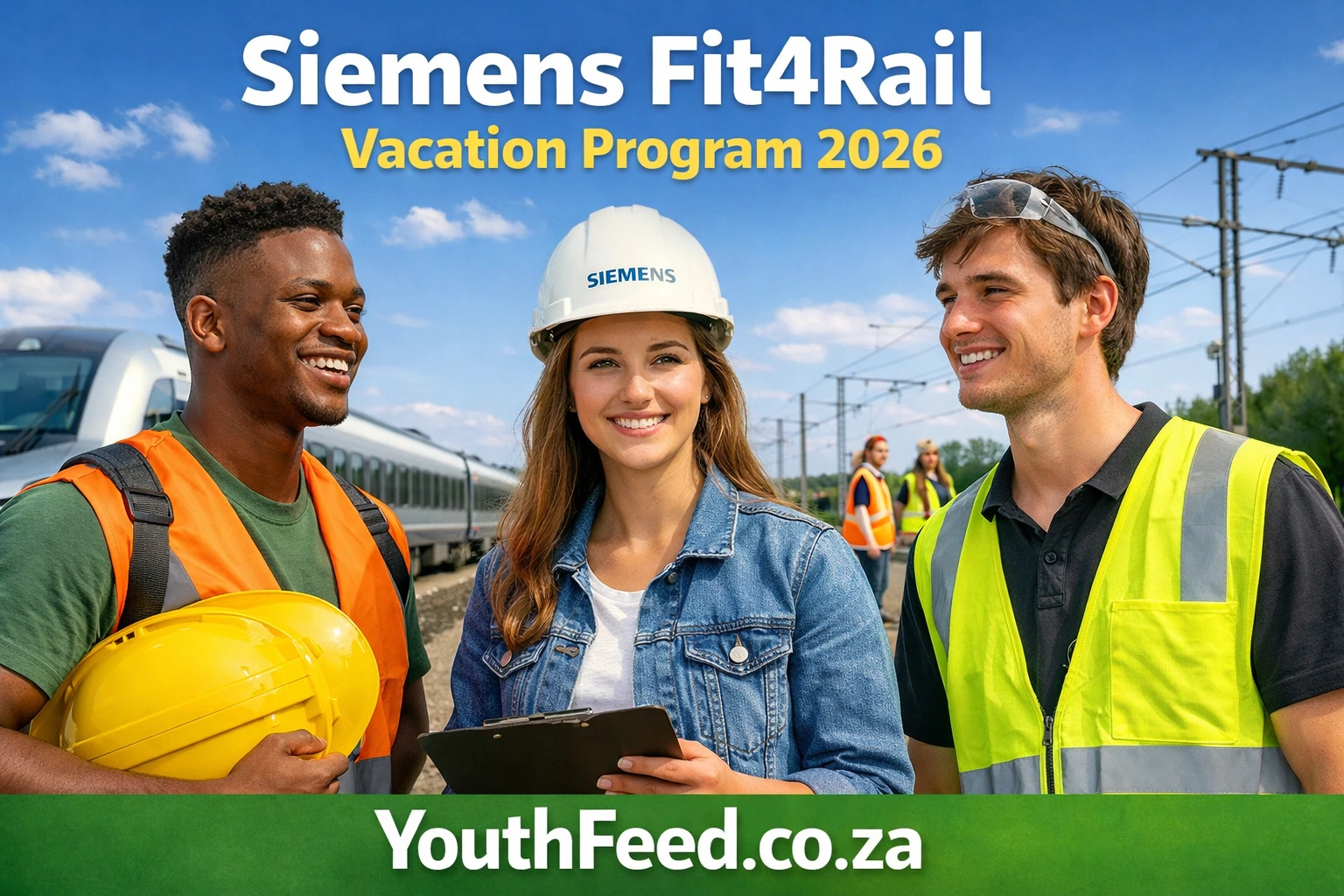
There’s a noticeable shift happening in how young professionals think about careers and the Siemens Fit4Rail Vacation Program is quietly becoming part of that conversation. At a time when industries are racing toward digital transformation and sustainability, rail infrastructure once seen as old-school is suddenly back in the spotlight.
And not just anywhere. Through initiatives led by Siemens Mobility, the railway sector is being reintroduced to a new generation as a high-tech, future-facing career path. The Fit4Rail Vacation Program 2026 isn’t just another student internship it’s emerging as a gateway into one of the most complex and evolving industries in the world.
So why is this program gaining traction now? And what does it signal about where careers and infrastructure are heading?
The Bigger Picture: How Rail Became Relevant Again
For years, rail systems were viewed as stable but slow-moving. That perception has changed dramatically.
Globally, governments and corporations are investing heavily in sustainable transport. Rail—especially electrified and digitally managed networks—has become central to reducing emissions and improving urban mobility. Companies like Siemens Mobility have been at the forefront of this transformation, developing intelligent traffic systems, automated trains, and advanced signalling technologies.
In this context, the Fit4Rail Program was developed as a strategic response. Originally linked to major infrastructure projects, it aimed to build a pipeline of talent equipped to understand and operate modern railway systems.
Now, in 2026, that early vision is paying off.
Inside the Siemens Fit4Rail Vacation Program
At its core, the Siemens Fit4Rail Vacation Program is a structured, nine-week (45 working days) learning experience designed for university students. But unlike traditional internships that often limit students to observation, this program emphasizes immersion.
Participants are introduced to:
- Rolling stock systems (trains and locomotives)
- Rail electrification technologies
- Signalling and automation systems
- Depot operations and maintenance
- Environmental, Health, and Safety (EHS) frameworks
- Automated Fare Collection (AFC) systems
This isn’t theoretical exposure. Students engage in real-world environments, supported by mentors and technical experts, while contributing to actual projects under supervision.
The program blends:
- Structured onboarding and safety training
- Technical classroom sessions
- Site visits to operational rail environments
- Continuous evaluation and feedback
By the end, participants don’t just leave with a certificate—they leave with a working understanding of how modern rail systems function as integrated ecosystems.
Why Students Are Paying Attention
There’s a growing awareness among students that the future of engineering and business careers lies in interdisciplinary fields. The Fit4Rail Program taps directly into that shift.
It’s not limited to engineering students. While disciplines like electrical, mechanical, electronics, mechatronics, and IT are central, business students also find relevance in areas like operations, logistics, and project management.
What makes the program stand out is its modular learning approach. Instead of a one-size-fits-all structure, participants are exposed to different “lots” or subsystems, allowing them to see how various components of a railway network interact.
This kind of exposure is rare—and valuable.
Recent Developments Driving Interest
Several factors are contributing to the increased attention around the Siemens Fit4Rail Vacation Program in 2026:
1. The Rise of Smart Infrastructure
Rail systems are becoming increasingly digital. Automation, AI-driven maintenance, and real-time data systems are redefining operations. Students interested in tech are realizing that rail is no longer just mechanical—it’s deeply digital.
2. Sustainability as a Career Driver
With climate concerns shaping career choices, many students are actively seeking roles that contribute to greener solutions. Rail transport is one of the most energy-efficient modes of mass transit, making it an attractive sector.
3. Skills Gap in Infrastructure
There’s a global shortage of professionals skilled in large-scale infrastructure systems. Programs like Fit4Rail are being seen as early entry points into a field with long-term demand.
4. Employer Branding and Talent Pipelines
Companies like Siemens are increasingly investing in early talent programs to identify and nurture high-potential candidates before they enter the job market.
Public Reaction: Quiet Buzz, Growing Curiosity
Unlike viral tech internships or flashy corporate graduate programs, the Fit4Rail Program hasn’t exploded on social media—but that’s starting to change.
Among university circles, especially in engineering faculties, there’s a growing buzz. Students who have participated in similar programs often highlight:
- The depth of technical exposure
- The professionalism of the working environment
- The opportunity to work on real infrastructure systems
There’s also increasing curiosity from students who previously hadn’t considered rail as a career option. The program is reshaping perceptions—positioning rail as innovative, impactful, and future-ready.
The Culture Behind the Opportunity
Part of what makes the Siemens Fit4Rail Vacation Program compelling is the culture it introduces students to.
At Siemens Mobility, the emphasis is on:
- Open debate and diverse perspectives
- Challenging conventional thinking
- Continuous learning and innovation
Participants are encouraged not just to observe, but to question, contribute, and think critically. This aligns with broader shifts in workplace culture, where adaptability and curiosity are valued as much as technical skills.
ALSO APPLY FOR:Dis-Chem Dispensary Support Learnerships 2026
Why This Matters Right Now
The timing of the Siemens Fit4Rail Vacation Program’s growing visibility isn’t coincidental.
We’re at a point where:
- Infrastructure investment is accelerating globally
- Sustainable transport is becoming a policy priority
- Young professionals are rethinking career paths
The program sits at the intersection of all three.
For students, it offers a chance to gain exposure to a sector that is both stable and evolving. For the industry, it represents a way to build a workforce capable of managing increasingly complex systems.
And for companies like Siemens, it’s a strategic investment in the future.
Also APPLY HERE: Digby Wells Environmental GIS Internships 2026
What Could Happen Next
Looking ahead, several possible developments could shape the trajectory of the Fit4Rail Program:
Expansion Across Regions
As demand for rail expertise grows, similar programs could be expanded to more regions, increasing accessibility for students worldwide.
Integration with Graduate Programs
The vacation program could become a feeder into more advanced graduate or trainee programs, creating a clear pathway from education to employment.
Increased Digital Focus
Future iterations may place even greater emphasis on software, data analytics, and AI, reflecting the ongoing digitalization of rail systems.
Stronger Industry-Academic Partnerships
Universities may begin integrating programs like Fit4Rail into their curricula, recognizing their value in preparing students for real-world challenges.
The Skills That Set Participants Apart
One of the most underrated aspects of the Siemens Fit4Rail Vacation Program is how it shapes soft skills alongside technical knowledge.
Participants are expected to:
- Communicate effectively within teams
- Adapt to structured, safety-critical environments
- Solve problems in real time
- Manage deadlines and expectations
These are transferable skills—valuable not just in rail, but across industries.
A Closer Look at Eligibility
The program is designed to be accessible while still maintaining a high standard.
Typical requirements include:
- Being a currently enrolled undergraduate or recent graduate
- Studying in relevant fields such as engineering or business
- Demonstrating strong academic performance
- Showing genuine interest in the mobility or infrastructure sector
Notably, prior work experience isn’t required making it an ideal entry point for students looking to gain their first industry exposure.
Balancing Opportunity with Reality
It’s worth noting that while the Fit4Rail Program offers significant benefits, it’s not without its challenges.
Participants must navigate:
- Technical complexity across multiple systems
- Strict safety and compliance standards
- The demands of a structured, evaluation-driven environment
This isn’t a casual internship. It’s designed to simulate real working conditions something that can be both rewarding and demanding.
APPLY HERE: Siemens Fit4Rail Vacation Program 2026
FAQ: Siemens Fit4Rail Vacation Program
1. Who can apply for the Siemens Fit4Rail Vacation Program?
Undergraduate students and recent graduates in engineering or business-related fields are typically eligible.
2. How long does the program last?
The program usually runs for 9 weeks (45 working days).
3. Do I need prior work experience?
No. The program is designed for students with little to no professional experience.
4. What kind of experience will I gain?
You’ll gain hands-on exposure to railway systems, including technical training, site visits, and real-world project involvement.
5. Does the program lead to full-time employment?
While not guaranteed, it can open pathways to future opportunities within the company or industry.
Final Thoughts: More Than Just a Vacation Program
The Siemens Fit4Rail Vacation Program represents something larger than a short-term internship.
It reflects a broader shift in how industries are engaging with young talent and how students are responding to emerging career opportunities. As rail systems continue to evolve into smart, sustainable networks, the need for skilled professionals will only grow.
Programs like Fit4Rail aren’t just preparing students for jobs. They’re preparing them for industries that are still being defined.