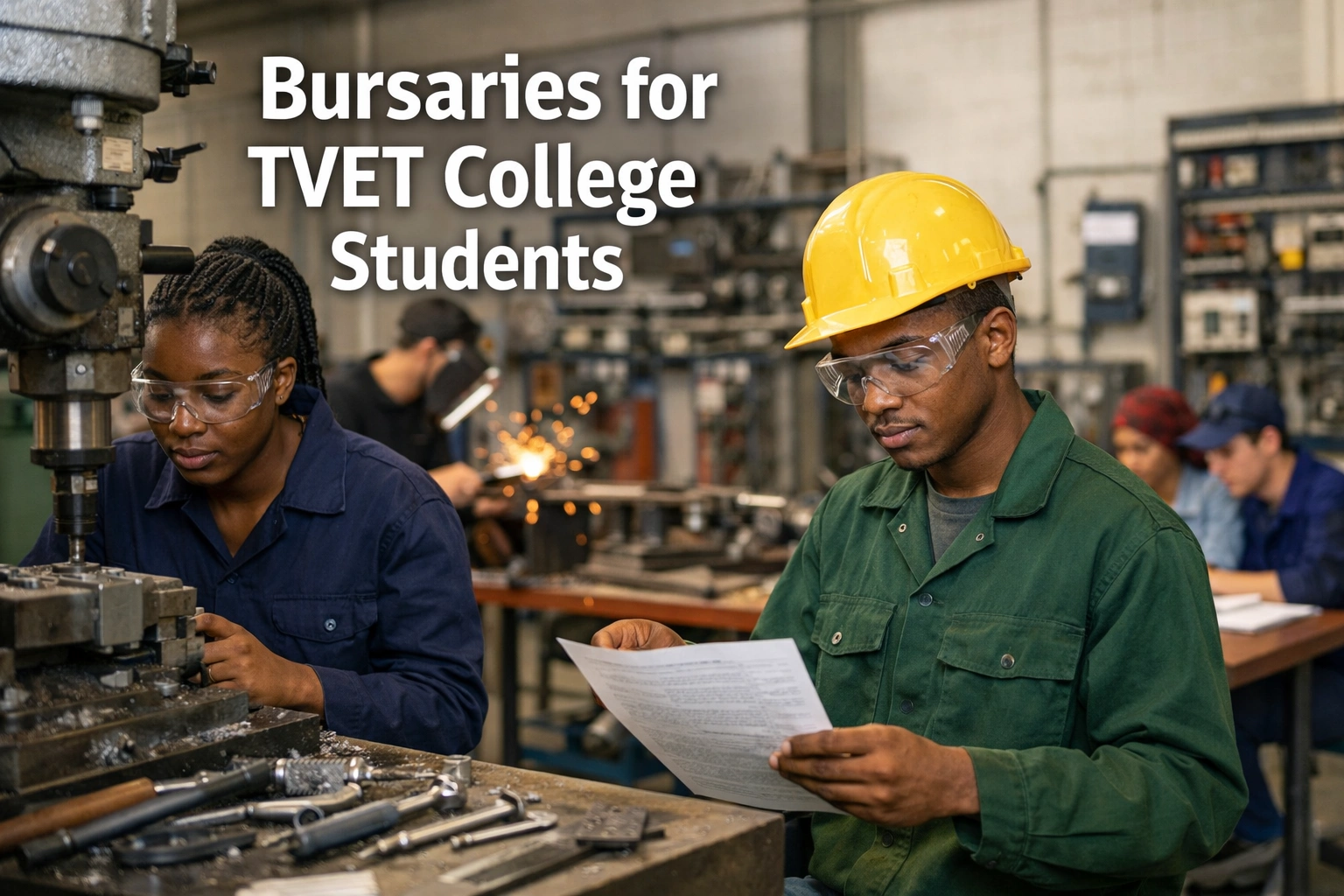
Bursaries for TVET College Students: For many students in South Africa, getting into a Technical and Vocational Education and Training (TVET) college is only half the battle. The real challenge begins when tuition fees, accommodation, transport, and daily living costs start adding up. Even though TVET colleges are more affordable than universities, the financial pressure can still be overwhelming—especially for students from low-income households.
This is where [KEYWORD] become not just helpful, but essential. Yet many students either don’t know these opportunities exist or struggle to navigate the application process. Others apply incorrectly and miss out on funding that could have changed their lives.
This guide breaks everything down in practical, real-world terms—so you can understand how bursaries work, where to find them, and how to actually secure one.
Understanding Bursaries for TVET College Students
Before jumping into applications, it’s important to understand what bursaries are—and how they differ from loans.
A bursary is financial support that does not need to be repaid, provided you meet certain conditions (like passing your courses or completing your qualification). For TVET students, bursaries often cover:
- Tuition fees
- Accommodation or transport
- Study materials
- Monthly allowances (in some cases)
The most well-known funding scheme is the National Student Financial Aid Scheme (NSFAS), which supports thousands of TVET students every year. But NSFAS is not the only option—many private companies, SETAs (Sector Education and Training Authorities), and government departments also offer bursaries.
Why This Issue Matters
Access to education is one of the biggest drivers of economic mobility. But without financial support, many capable students are forced to drop out or never enroll in the first place.
TVET colleges play a critical role in addressing unemployment by offering practical, skills-based training in fields like:
- Engineering
- Construction
- Hospitality
- Information Technology
The real-world impact is significant:
- Higher dropout rates due to financial stress
- Skills shortages in key industries
- Persistent unemployment, especially among youth
In short, bursaries don’t just help individuals—they strengthen the broader economy.
Types of Bursaries Available to TVET Students
Not all bursaries are the same. Understanding the different types helps you target the right opportunities.
1. Government-Funded Bursaries
The biggest player here is NSFAS, which supports eligible students enrolled at public TVET colleges.
What it typically covers:
- Tuition
- Registration fees
- Learning materials
- Transport or accommodation allowances
2. SETA Bursaries
Sector Education and Training Authorities fund students in specific industries.
Examples:
- Construction SETA (CETA)
- Manufacturing, Engineering and Related Services SETA (MERSETA)
These bursaries are often tied to skills shortages and may include workplace training.
3. Private Company Bursaries
Large companies invest in future talent by funding students.
Industries include:
- Mining
- Banking
- Telecommunications
These bursaries often come with work-back agreements, meaning you’ll work for the company after graduating.
4. Provincial Government Bursaries
Some provinces offer bursaries to students studying in priority sectors.
Step-by-Step: How to Apply for Bursaries for TVET College Students
Getting a bursary is competitive—but following a clear process increases your chances significantly.
Step 1: Check Your Eligibility
Before applying, confirm you meet the requirements.
Typical criteria:
- South African citizenship
- Financial need (household income threshold)
- Acceptance or enrollment at a TVET college
- Academic performance (minimum pass requirements)
Step 2: Gather Required Documents
Incomplete applications are one of the biggest reasons students get rejected.
You’ll usually need:
- Certified copy of ID
- Proof of income (parents/guardians)
- Academic records
- Proof of residence
- Acceptance letter from a TVET college
Step 3: Apply Early
Deadlines matter more than you think. Many bursaries close months before the academic year begins.
NSFAS, for example, typically opens applications around September and closes in January.
Step 4: Apply to Multiple Opportunities
Don’t rely on just one bursary. Apply to several to increase your chances.
Step 5: Track Your Application
After submitting, monitor your email or application portal regularly. Some bursaries require follow-up documents or interviews.
ALSO APPLY FOR: Allan Gray Orbis Fellowship Bursary 2027
ALSO APPLY FOR: ABSA Bursary Programme 2026
ALSO READ ABOUT: Government Bursary Opportunities for 2026
Best Practices Experts Recommend
Students who successfully secure funding often follow a few key strategies.
Apply Even If You’re Unsure
Many students disqualify themselves before even trying. If you meet most requirements, apply anyway—some criteria are flexible.
Keep Your Documents Updated
Certified documents older than three months are often rejected. Always submit fresh copies.
Write a Strong Motivation Letter
Some bursaries require a personal statement. This is your chance to stand out.
Focus on:
- Your career goals
- Why you chose your field
- How the bursary will help you succeed
Use Official Sources Only
Scams are common. Always apply through:
- Official websites
- Recognized institutions
- Verified company pages
Stay Organized
Create a simple system:
- Track deadlines
- Save documents digitally
- Keep copies of applications
Mistakes People Often Make
Even strong candidates get rejected due to avoidable errors.
Applying Late
Missing deadlines automatically disqualifies you—no matter how strong your application is.
Submitting Incomplete Applications
Leaving out documents or forms is one of the top reasons for rejection.
Ignoring Eligibility Criteria
Applying for bursaries you clearly don’t qualify for wastes time and energy.
Poor Communication
Using an unprofessional email address or not checking your messages can cost you opportunities.
Relying Only on NSFAS
While National Student Financial Aid Scheme is important, competition is high. Many students miss out by not exploring alternatives.
Where to Find Bursaries for TVET College Students
Finding opportunities is often the hardest part.
Here are reliable sources:
- Official TVET college websites
- NSFAS portal
- SETA websites
- Company career pages
- Government education portals
You can also check notice boards at your college—many opportunities are shared internally.
FAQ: Bursaries for TVET College Students
1. Can I apply for a bursary if I’ve already started studying?
Yes. Many bursaries accept current students, especially if you show good academic progress.
2. What happens if I fail a subject?
It depends on the bursary. Some allow limited failures, while others require you to pass all modules to continue receiving funding.
3. Can I have more than one bursary?
Usually no. Most bursaries don’t allow double funding, especially if they cover the same expenses.
4. How long does it take to get feedback?
It varies. Some bursaries respond within weeks, while others take several months. Always keep checking your application status.
Turning Opportunity into Action
The reality is simple: thousands of students need funding, but only those who apply correctly and consistently stand a real chance.
If you take one thing from this guide, let it be this:
- Start early
- Apply widely
- Stay organized
- Follow instructions carefully

TVET education is one of the most practical pathways into employment in South Africa. With the right funding, it becomes not just accessible—but transformative.