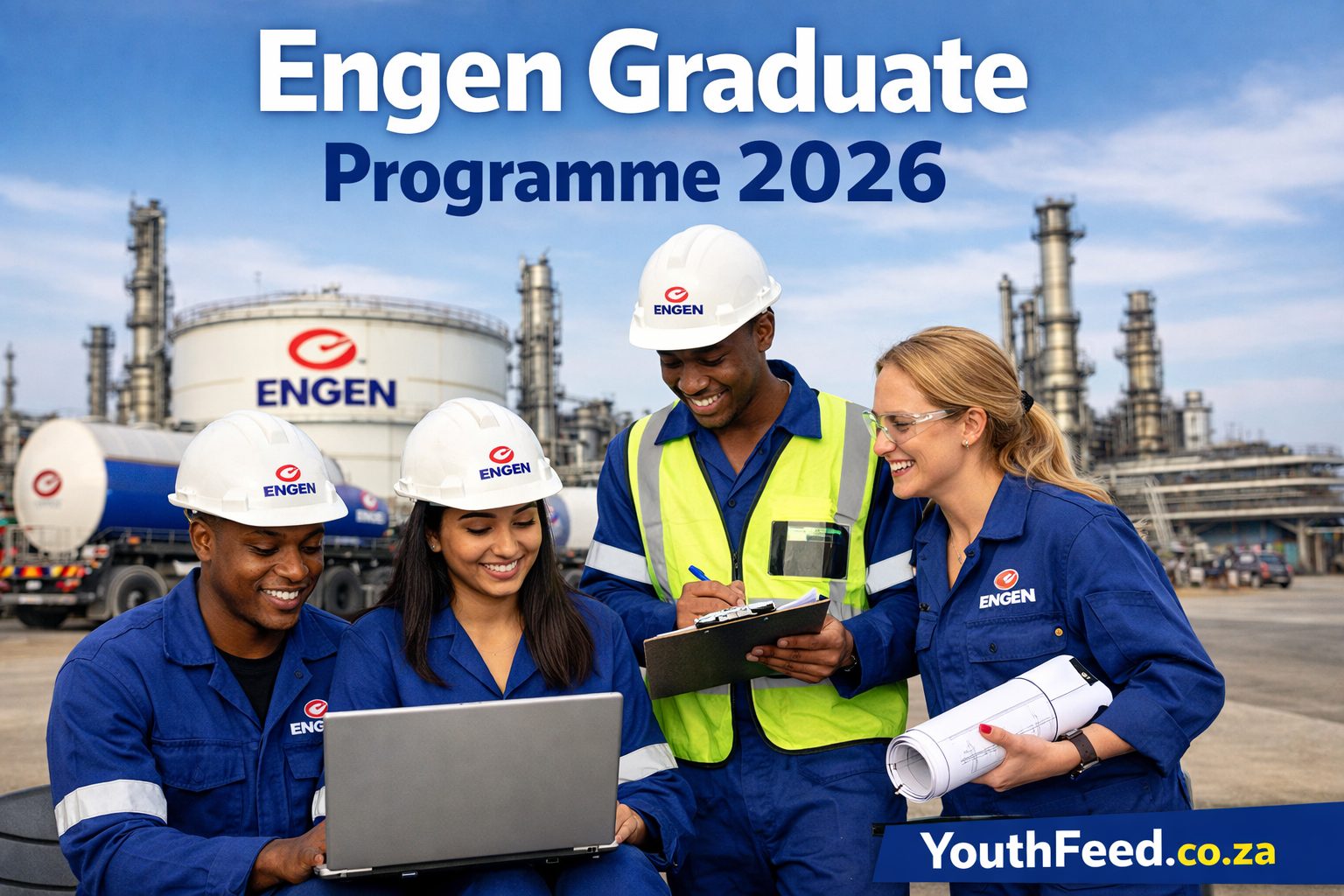
The Engen Graduate Programme 2026 offers recent graduates an opportunity to gain structured workplace experience inside a major energy and petroleum organisation. The programme is designed to help young professionals transition from university into the professional environment through mentorship, training and real project work.
According to the official advert, the programme runs for 24 months and includes hands-on experience across key business areas. Selected graduates will work with experienced professionals while developing technical knowledge and practical workplace skills.
Opportunities are available for graduates in Chemistry or Chemical Sciences, Architecture or Architectural Studies, and Economics. The placements are based in Durban and Cape Town, depending on the field of study.
Applications must include several supporting documents, including academic records and identification documents. The advert also states that applications close five days after the job advert is posted, meaning candidates need to check the original posting date carefully to confirm their deadline.
Below is a detailed guide explaining what this graduate programme involves, who qualifies, and how to prepare a strong application.
What This Programme Is
Graduate programmes are structured development pathways designed for people who have recently completed university studies. The Engen Graduate Programme 2026 aims to provide practical exposure to industry operations while developing professional skills.
Participants in the programme typically rotate through selected business areas relevant to their qualifications. This approach allows graduates to see how different parts of the organisation work together and where their expertise can contribute.
The programme combines three core elements:
Hands-on project experience
Graduates work on real tasks rather than purely theoretical training.
Mentorship from industry professionals
Senior staff guide participants and provide professional development support.
Accredited training and development
Structured learning opportunities help build skills needed for long-term career growth.
For graduates entering competitive technical fields, programmes like this often serve as an important first step into industry.
READ MORE ABOUT Learnership vs Internship vs Apprenticeship 2026
What You’ll Actually Do
Although the advert summarises the programme broadly, the listed study fields give insight into what participants may work on.
Chemistry / Chemical Sciences (Durban)
Graduates in chemistry-related disciplines may be involved in areas such as:
- Laboratory testing and analysis
- Supporting research and product development
- Monitoring product quality and safety standards
- Assisting with chemical process evaluations
- Working with teams responsible for quality assurance
This type of exposure can help graduates understand how scientific research translates into industrial applications.
Architecture or Architectural Studies (Cape Town)
Architecture graduates may assist with tasks such as:
- Supporting design and planning projects
- Producing drafting and technical drawings
- Creating design models or architectural documentation
- Assisting with project planning and technical coordination
- Supporting teams involved in infrastructure or property development
This experience can help architecture graduates develop real-world project exposure beyond academic design work.
APPLY HERE: Rand Water Graduate Internship Programme 2026
Economics (Cape Town)
Graduates with an economics background may support activities such as:
- Economic research and data analysis
- Business modelling or forecasting
- Supporting strategic planning teams
- Analysing market trends and industry performance
- Preparing reports that assist decision-making
Exposure to corporate planning and market analysis can help economics graduates develop valuable analytical experience.
Who Qualifies
Based on the information provided in the advert, applicants should meet the following criteria.
Minimum Requirements Checklist
✔ BSc in Chemistry or Chemical Sciences
✔ BSc in Architecture or Architectural Studies
✔ BCom or BSc in Economics
✔ Strong academic record
✔ Good communication skills
✔ Problem-solving ability
✔ Ability to work collaboratively in a team environment
✔ Interest in learning and professional development
Applicants must also submit the following documents:
- Certified copy of matric certificate
- Certified academic transcript
- Certified degree certificate
- Certified copy of ID
- Curriculum Vitae (CV)
Why Applicants Get Disqualified
Many graduate programme applications fail for avoidable reasons. Some common issues include:
Missing supporting documents
The advert specifically requires certified copies of several documents. Applications without these may not be considered.
Applying after the closing date
The advert states that vacancies close five days after posting, so late submissions will not be reviewed.
Submitting incomplete applications
Failure to attach transcripts, ID documents or a CV can disqualify an application.
Incorrect qualification
Applicants must apply for the field matching their degree.
Ignoring submission instructions
The advert states that applications must be submitted in the manner requested by the employer.
Who Should Apply
This programme may be particularly suitable for:
- Graduates who recently completed a degree in the listed fields
- Individuals seeking structured workplace experience
- Candidates interested in working within a large industrial organisation
- Graduates who want mentorship and guided professional development
Applicants who enjoy problem-solving, technical learning and working in multidisciplinary teams may benefit the most from this type of programme.
Competition Level: High
Graduate programmes run by large national companies typically attract a high number of applicants.
Several factors contribute to the likely competition level:
- The programme offers structured training over 24 months
- The organisation is widely recognised in the energy sector
- The number of available positions is limited
- Opportunities are available in popular fields such as economics and architecture
Because of this, a well-prepared application becomes important.
Tips to Improve Your Selection Chances
While no application can guarantee selection, the following steps may strengthen your submission:
Tailor your CV
Highlight university projects, research work or internships related to the advertised fields.
Emphasise problem-solving experience
Graduate programmes often look for candidates who demonstrate analytical thinking.
Include academic achievements
If you received distinctions or academic awards, mention them clearly.
Prepare a professional CV layout
A clean, organised CV helps recruiters review your information quickly.
Double-check your documentation
Ensure all required documents are certified and legible.
Common Mistakes Applicants Make
Some frequent mistakes include:
- Submitting outdated CVs
- Uploading unclear scanned documents
- Forgetting to certify academic documents
- Sending large files that fail to upload properly
- Waiting until the last day to apply
Avoiding these mistakes improves the chances that your application will be successfully reviewed.
Application Strategy (Step-by-Step)
Because the advert does not provide a direct application link, applicants should follow a verification-first approach.
Step 1: Visit the employer’s official careers platform
Search for the programme title or graduate opportunities.
Step 2: Confirm the advert posting date
Since the closing date depends on when the advert was posted, verify the exact timeline.
Step 3: Prepare your documents
Ensure all documents are certified and saved in a clear format.
Step 4: Submit the application according to instructions
Follow the submission process described on the official platform.
Step 5: Keep copies of your application
Save confirmation emails or submission screenshots.
Documents Checklist
Applicants should prepare the following documents.
Required (stated in advert)
- Certified matric certificate
- Certified qualification transcript
- Certified degree certificate
- Certified copy of ID
- Curriculum Vitae
Possibly useful (not stated in the official advert)
- Academic references
- Portfolio (for architecture graduates)
- Cover letter
If additional documents are required, the official application page will normally specify them.
Safety & Scam Check
When applying for graduate programmes, always follow basic safety precautions.
- Never pay fees for internships, graduate programmes or learnership applications.
- Verify the employer’s official website domain before submitting personal information.
- Confirm the reference number or programme title where possible.
- Avoid WhatsApp-only applications that request documents or payments.
- Use official careers portals whenever possible.
Legitimate employers generally provide clear application instructions and never charge application fees.
APPLY HERE FOR THE Engen Graduate Programme 2026
FAQs About the Engen Graduate Programme 2026
1. How long is the programme?
The advert states that the programme runs for 24 months.
2. Where will graduates be based?
Placements are listed in Durban and Cape Town, depending on the field.
3. Is the stipend mentioned?
The stipend is not stated in the official advert.
4. How many positions are available?
Five opportunities are listed across the three study fields.
5. When does the programme close?
Applications close five days after the advert is posted.
6. Can graduates from other degrees apply?
Only the listed qualifications are mentioned in the advert.
7. Are people with disabilities encouraged to apply?
Yes. The advert states that applications from people with disabilities are welcomed.
8. Is employment guaranteed after the programme?
The advert does not guarantee appointment or interviews.
9. What documents must be submitted?
Certified copies of academic records, ID and a CV are required.
10. Can late applications be considered?
No. The advert states that late submissions will automatically not be considered.
Final Assessment
The Engen Graduate Programme 2026 offers a structured entry point into professional work for graduates in science, architecture and economics. With a two-year development period and mentorship from experienced professionals, the programme can provide meaningful industry exposure.
However, the limited number of available positions means applicants should prepare carefully and ensure their documentation is complete.
Candidates interested in building technical expertise, gaining workplace exposure and developing professional skills may find this programme worth exploring, provided they verify the closing timeline and apply through official channels.