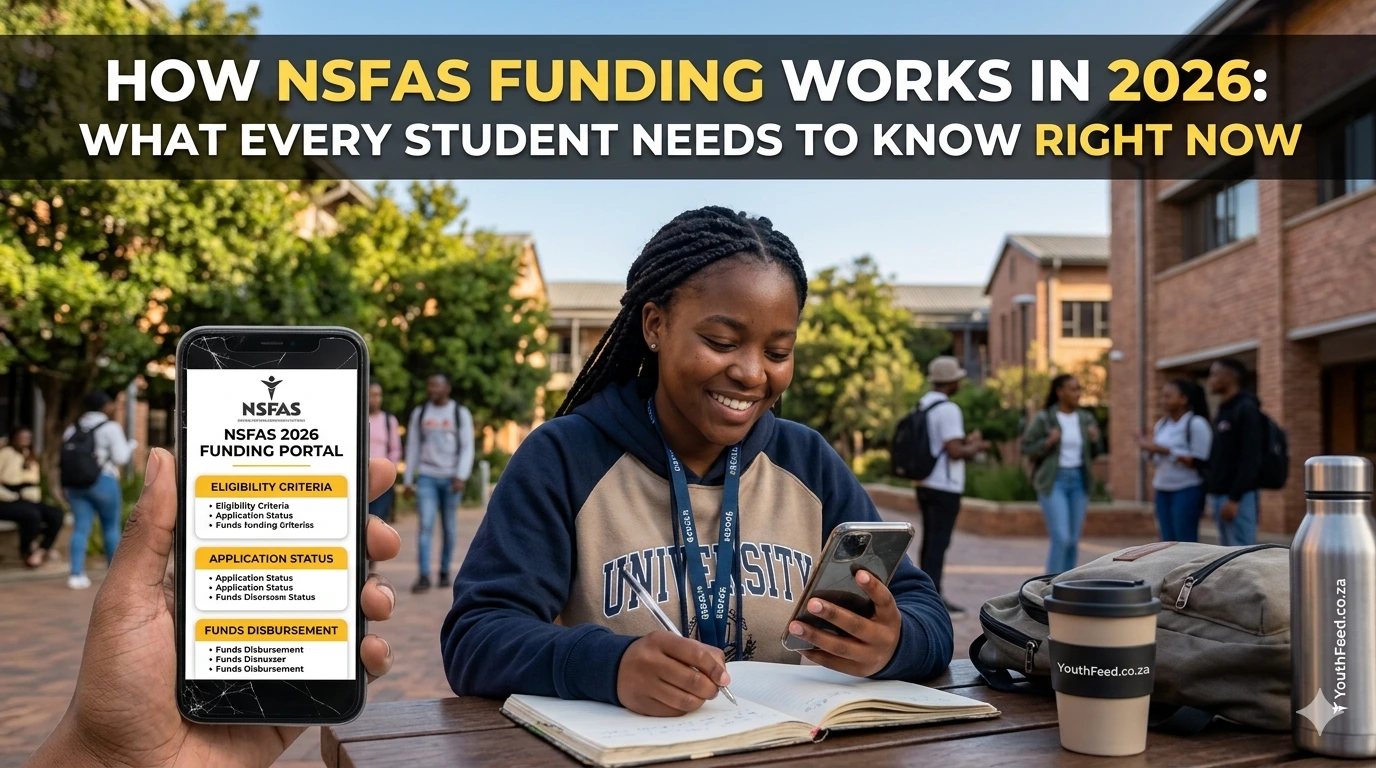
There’s a reason How NSFAS Funding Works has suddenly become one of the most searched topics in South Africa this year. After a turbulent start to the 2026 academic cycle, marked by delayed payments, student protests, and policy tweaks, thousands of students are trying to understand not just whether they’ll be funded, but how the system actually works.
For many, National Student Financial Aid Scheme (NSFAS) isn’t just financial assistance, it’s the difference between attending university and staying home. But in 2026, the funding model has evolved, and understanding it is no longer optional. It’s essential.
The Basics: How NSFAS Funding Works in 2026
At its core, NSFAS is a government-funded scheme designed to support students from low- and middle-income households. It primarily funds students attending public universities and TVET colleges across South Africa.
Here’s how it works in simple terms:
- Eligibility is income-based: Students from households earning below a certain threshold qualify.
- Funding covers more than tuition: This includes accommodation, transport, learning materials, and living allowances.
- It’s mostly a bursary, not a loan: As long as students meet academic requirements, they don’t need to repay the funding.
But while the structure seems straightforward, the execution has been anything but.
How We Got Here: A System Under Pressure
To understand the current moment, you need to look at how NSFAS has evolved over the past decade.
Originally a loan scheme, NSFAS transitioned into a bursary system around 2018 following nationwide student protests under movements like #FeesMustFall. The government committed to making higher education more accessible, especially for disadvantaged students.
Since then, the number of beneficiaries has surged dramatically. Today, NSFAS supports over a million students across institutions such as University of Johannesburg, University of Cape Town, and numerous TVET colleges.
But with growth came strain.
- Administrative delays became more frequent
- Payment systems struggled to scale
- Communication gaps widened between students and institutions
By 2025, it was clear: the system needed reform.
READ MORE ABOUT: How Employers Benefit From Learnership Programmes in South Africa 2026
What Changed in 2026?
The 2026 academic year introduced several key updates that have reshaped how NSFAS funding works—and why it’s trending now.
1. New Direct Payment System
One of the biggest shifts is the rollout of a centralized NSFAS payment system, designed to pay allowances directly to students rather than through universities.
The intention? Reduce corruption and delays.
The reality? Mixed results.
Some students reported faster payments, while others faced verification issues and account setup delays.
2. Stricter Eligibility Verification
NSFAS has tightened its verification processes to prevent fraud and ensure funding reaches the right students.
This includes:
- Cross-checking with government databases
- More detailed income verification
- Academic progression checks
While this improves accountability, it has also led to increased application rejections and appeals.
3. Accommodation Cap Controversy
Another major change is the introduction of capped accommodation allowances.
Students in major cities like Johannesburg and Cape Town argue that the cap doesn’t reflect real rental costs.
This has sparked protests and renewed debates about whether NSFAS truly meets students’ needs.
The Public Reaction: Frustration, Relief, and Uncertainty
If you scroll through social media, the sentiment around NSFAS in 2026 is deeply divided.
Students
Many students feel caught in a system that promises support but often delivers late.
Common concerns include:
- Delayed allowances
- Unclear communication
- Rejected applications without explanation
At the same time, thousands of students do receive funding successfully highlighting a system that works for some, but not all.
Universities
Institutions are also feeling the pressure.
Universities rely on NSFAS payments to stabilize their finances. Delays affect:
- Student registrations
- Accommodation planning
- Academic continuity
This creates a ripple effect across the entire education ecosystem.
Government Response
Officials have defended the changes, emphasizing long-term sustainability and fraud prevention.
The message is clear: short-term pain for long-term stability.
But whether students are willing to wait is another question entirely.
Why This Matters Right Now
This isn’t just a policy issue, it’s a national conversation about access, inequality, and opportunity.
South Africa faces one of the highest youth unemployment rates globally. For many young people, education is the only viable path forward.
If NSFAS works, it opens doors.
If it fails, it shuts them.
Right now, the stakes are especially high because:
- The 2026 intake is one of the largest ever
- Economic pressures are increasing household reliance on funding
- Trust in public institutions is being tested
Understanding How NSFAS Funding Works is no longer just for applicants—it’s for anyone invested in the country’s future.
APPLY HERE FOR THE Thales Customer Services Intern – Banking & Payments 2026
Breaking It Down: What Students Actually Receive
To cut through the confusion, here’s what NSFAS typically covers in 2026:
Tuition Fees
Paid directly to the institution.
Accommodation
- University residences or private accommodation
- Subject to capped limits
Living Allowance
Monthly stipend for food and basic needs.
Transport Allowance
For students living off-campus within a certain distance.
Learning Materials
Annual allowance for books and supplies.
The Hidden Challenges Students Face
Even with funding approved, students encounter real-world challenges:
- Delayed disbursements: Students may go weeks without allowances
- Accommodation shortages: Especially in urban areas
- Digital access issues: Required for verification and communication
These challenges highlight a critical gap between policy design and lived experience.
What Could Happen Next
Looking ahead, several possible scenarios could shape the future of NSFAS.
Scenario 1: System Stabilization
If the new payment system improves and administrative bottlenecks are resolved, NSFAS could become more efficient than ever before.
This would restore trust and improve student outcomes.
Scenario 2: Increased Protests
If delays and funding gaps persist, student protests could intensify, similar to past movements.
This could force further policy changes or increased government funding.
Scenario 3: Policy Reform
There’s growing discussion about:
- Increasing funding thresholds
- Adjusting accommodation caps
- Introducing hybrid funding models
These reforms could redefine how NSFAS operates in the long term.
Scenario 4: Digital Transformation
NSFAS may invest more heavily in technology to streamline applications, payments, and communication.
A fully digital system could reduce human error, but only if implemented effectively.
READ MORE ABOUT Learnership vs Internship vs Apprenticeship 2026
The Bigger Picture: More Than Just Funding
At its heart, NSFAS represents something bigger than financial aid.
It’s about:
- Social mobility
- Economic inclusion
- Educational equity
But systems like this don’t just need funding, they need trust, transparency, and consistent delivery.
Right now, that trust is being tested.
FAQs: How NSFAS Funding Works
1. Who qualifies for NSFAS funding in 2026?
Students from households earning below the income threshold (typically R350,000 per year) who are studying at public institutions.
2. Is NSFAS a loan or a bursary?
It’s mostly a bursary students don’t repay it if they meet academic requirements.
3. What happens if my application is rejected?
You can submit an appeal with supporting documents for reconsideration.
4. How are NSFAS allowances paid?
In 2026, payments are made directly to students through a centralized system.
5. Does NSFAS cover private colleges?
No, it mainly funds public universities and TVET colleges.
Final Thoughts
Understanding How NSFAS Funding Works in 2026 means looking beyond the application form.
It means recognizing the complexity of a system trying to serve millions under real-world constraints.
For some students, NSFAS is working exactly as intended, opening doors and changing lives.
For others, it’s a source of stress, uncertainty, and frustration.
The truth lies somewhere in between.
What happens next will depend not just on policy changes, but on whether the system can adapt quickly enough to meet the needs of the students it was designed to serve.