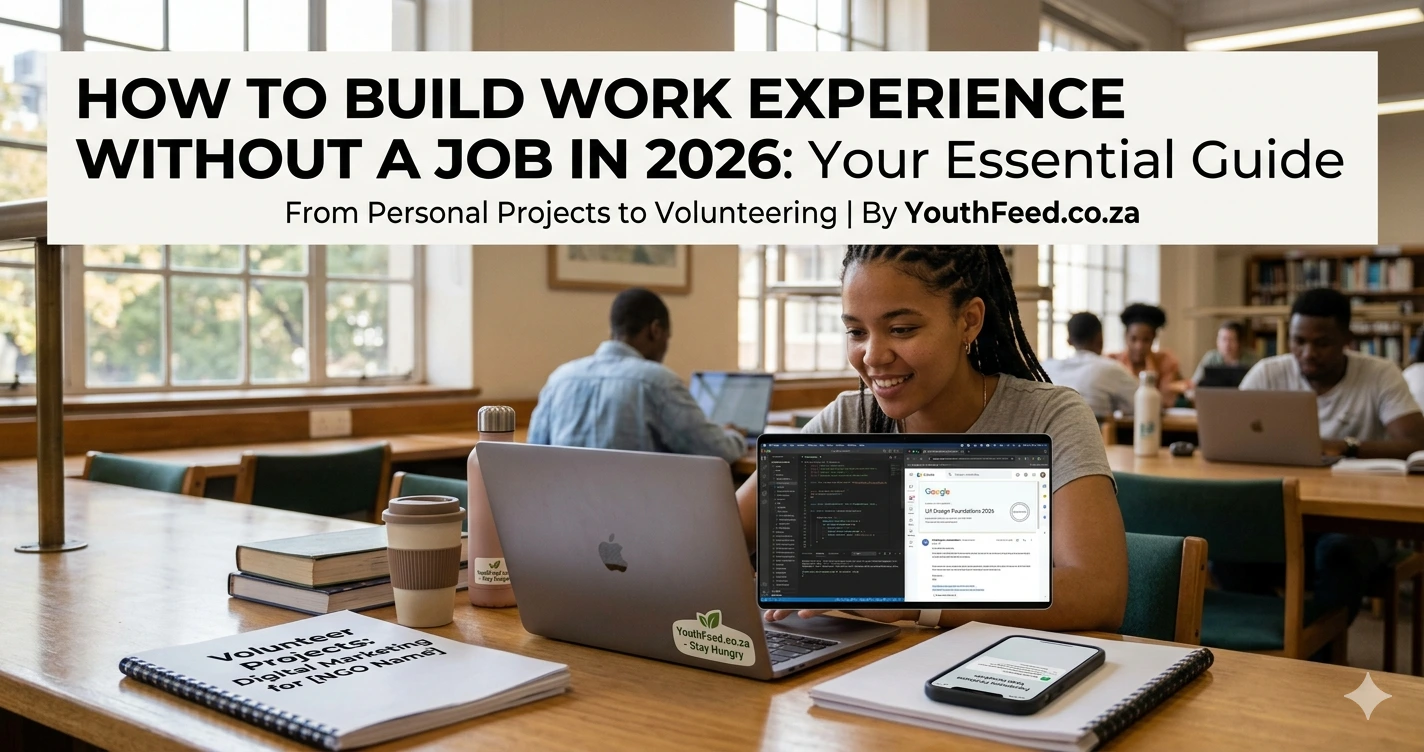
If it feels like everyone is asking for experience before offering opportunity, you’re not imagining things. In 2026, the job market has quietly shifted into something far more complex and frustrating for young people and job seekers. The phrase “entry-level” increasingly comes with hidden expectations: portfolios, proof of skills, and sometimes even real-world project experience.
That’s why the question “How to Build Work Experience Without a Job” is trending right now. It’s not just a curiosity, it’s a survival strategy.
Across South Africa and globally, job seekers are rewriting the rules. They’re finding unconventional ways to gain experience, prove their value, and stand out without waiting for someone to hire them first.
This is no longer a workaround. It’s becoming the new normal.
The Experience Paradox: How Did We Get Here?
The idea that you need experience to get experience isn’t new. But in recent years, it has intensified.
Several forces collided to create this moment:
- Digital transformation accelerated hiring expectations: Employers now want candidates who can contribute immediately.
- Automation and AI tools reduced the need for entry-level training roles.
- Economic pressure pushed companies to hire fewer people, but with more skills.
- Remote work opened global competition, making it harder for inexperienced candidates to stand out.
At the same time, education systems haven’t fully caught up. Many graduates still leave university or college with theoretical knowledge—but limited practical exposure.
The result? A generation stuck in limbo—qualified, but not “experienced enough.”
The Shift: Experience Is No Longer Tied to Employment
Here’s the surprising twist: employers are starting to care less about where you got experience—and more about whether you have it at all.
This shift is subtle but powerful.
Work experience in 2026 is no longer defined strictly by:
- Formal employment contracts
- Corporate internships
- Traditional office roles
Instead, it includes:
- Personal projects
- Freelance gigs
- Volunteer work
- Online collaborations
- Skill-based challenges
In other words, experience is now something you can build independently.
READ MORE ABOUT: How Employers Benefit From Learnership Programmes in South Africa 2026
Practical Ways to Build Work Experience Without a Job
Let’s get concrete. If you’re trying to break into the workforce, these are some of the most effective—and realistic—ways to gain experience right now.
1. Start With Self-Initiated Projects
One of the most underrated strategies is creating your own work.
Instead of waiting for someone to assign you tasks, you create them yourself.
Examples include:
- Building a simple website if you’re learning web development
- Managing a mock social media campaign
- Writing articles or blog posts in your field
- Designing logos or branding concepts
The key is to treat these projects seriously. Document your process, show results, and present them as part of a portfolio.
Employers increasingly view initiative as experience.
2. Volunteer Strategically (Not Randomly)
Volunteering has always been an option—but in 2026, it’s about strategic volunteering.
That means:
- Choosing roles that align with your career goals
- Taking on responsibilities that mirror real job tasks
- Asking for measurable outcomes (e.g., “grew social media by 20%”)
For example, helping a local NGO with admin tasks is good—but managing their digital presence is even better.
The difference lies in relevance.
3. Tap Into the Freelance Economy
The rise of freelance platforms and gig work has opened doors for beginners.
Even small jobs can count as experience:
- Writing short articles
- Designing basic graphics
- Data entry tasks
- Social media management
You might start with low-paying gigs—but what you gain is:
- Real client interaction
- Deadlines and accountability
- Tangible work samples
That’s gold in today’s job market.
APPLY HERE FOR THE Thales Customer Services Intern – Banking & Payments 2026
4. Build a Digital Portfolio (Even If It’s Small)
In 2026, your portfolio often speaks louder than your CV.
A strong portfolio doesn’t need to be massive. It needs to be:
- Clear
- Relevant
- Authentic
Include:
- Personal projects
- Volunteer work
- Freelance tasks
- Case studies (what you did, how, and why)
Think of your portfolio as proof that you can do the work, not just talk about it.
5. Participate in Online Communities and Challenges
Another emerging trend is community-based experience.
Online platforms now host:
- Hackathons
- Design challenges
- Writing competitions
- Coding bootcamps
These environments simulate real-world collaboration and pressure.
Even better, they often give you:
- Feedback
- Exposure
- Networking opportunities
In many cases, recruiters actively scout talent from these spaces.
6. Learn by Teaching Others
This might sound counterintuitive—but teaching is one of the fastest ways to build credibility.
You don’t need to be an expert. You just need to:
- Share what you’re learning
- Explain concepts in simple terms
- Document your progress
You can do this through:
- Social media threads
- Blog posts
- Short videos
This builds both confidence and visibility, two things employers notice.
READ MORE ABOUT Learnership vs Internship vs Apprenticeship 2026
Recent Developments: Why This Topic Is Blowing Up in 2026
The conversation around experience has gained momentum recently for a few reasons.
The Rise of Skills-Based Hiring
More companies are shifting toward skills-first hiring models, focusing on what candidates can actually do.
This has led to:
- Less emphasis on degrees alone
- More emphasis on portfolios and proof of work
- Increased demand for practical experience
Youth Unemployment Pressures
In countries like South Africa, youth unemployment remains a serious concern. This has pushed:
- Governments to promote learnerships and internships
- Young people to explore alternative ways to gain experience
The Influence of Content Creators
Career-focused content creators have also played a role. Many now share:
- “No experience? Do this instead” guides
- Portfolio-building tips
- Real-life success stories
This has helped normalize non-traditional paths into employment.
Public Reaction: Frustration Meets Creativity
The response to this shift has been mixed—but telling.
On one hand, there’s clear frustration:
- “Why do I need experience for an entry-level job?”
- “How am I supposed to get started?”
On the other hand, there’s a growing sense of empowerment.
More people are realizing:
- They don’t have to wait for permission
- They can create their own opportunities
- Experience is something they can build independently
This tension between frustration and creativity is driving innovation in how people approach careers.
Why This Matters Right Now
This isn’t just a trend. It’s a structural shift in how work—and opportunity—functions.
Here’s why it matters:
1. The Definition of “Qualified” Is Changing
Being qualified is no longer just about certificates. It’s about:
- Demonstrated ability
- Real-world application
- Adaptability
2. Early Action Creates a Massive Advantage
Those who start building experience early even informally gain a significant edge.
By the time they apply for jobs, they already have:
- Portfolios
- References
- Practical knowledge
3. It Levels the Playing Field (To an Extent)
While inequality still exists, this shift does create more access for:
- Self-taught individuals
- Those without formal degrees
- People in remote or underserved areas
The barrier to entry is still there but it’s changing shape.
The Hidden Challenge: Not All Experience Is Equal
While building experience independently is powerful, it comes with risks.
Not all experience carries the same weight.
For example:
- Random tasks without relevance may not help your career
- Poorly documented work won’t impress employers
- Lack of structure can limit learning
That’s why intentionality matters.
Ask yourself:
- Does this align with my goals?
- Can I show results?
- Would an employer value this?
If the answer is yes, you’re on the right track.
What Could Happen Next
Looking ahead, several trends could shape how work experience evolves even further.
1. Micro-Experience Will Become Formalized
We may see more structured systems for:
- Short-term projects
- Skill certifications
- Verified portfolios
Think of it as “experience in smaller pieces,” recognized by employers.
2. Employers Will Rely More on Proof Than Promises
CVs may continue to lose importance compared to:
- Work samples
- Live demonstrations
- Skills assessments
This could benefit candidates who take initiative early.
3. Education Will Adapt (Slowly)
Schools and universities may begin to:
- Integrate practical projects into curricula
- Partner with companies for real-world tasks
- Encourage portfolio-building from day one
But change here is likely to be gradual.
4. The Gap Between Proactive and Passive Job Seekers Will Widen
Perhaps the most important shift:
Those who actively build experience will move ahead faster.
Those who wait for opportunities may struggle more.
This divide could redefine career success in the coming years.
FAQs About How to Build Work Experience Without a Job
1. Can I really get hired without formal work experience?
Yes. Many employers now value portfolios, projects, and practical skills as much as (or more than) formal job experience.
2. What is the fastest way to build experience?
Starting personal projects and taking small freelance gigs are often the quickest ways to gain relevant, demonstrable experience.
3. Does volunteering count as work experience?
Absolutely—especially if it’s relevant to your field and includes measurable results.
4. How important is a portfolio in 2026?
Very important. A strong portfolio can often replace or strengthen a traditional CV.
5. What if I don’t know where to start?
Start small. Pick one skill, create a simple project, and build from there. Consistency matters more than perfection.
Final Thoughts: Rethinking What “Experience” Really Means
The biggest takeaway from 2026 is this:
Experience is no longer something you wait for, it’s something you create.
That doesn’t mean the system is fair. It doesn’t mean the challenges are gone.
But it does mean you have more control than you might think.
If you approach your journey strategically choosing the right projects, documenting your work, and staying consistent, you can build a body of experience that speaks for itself.
And in a world where proof matters more than promises, that might be your strongest advantage.