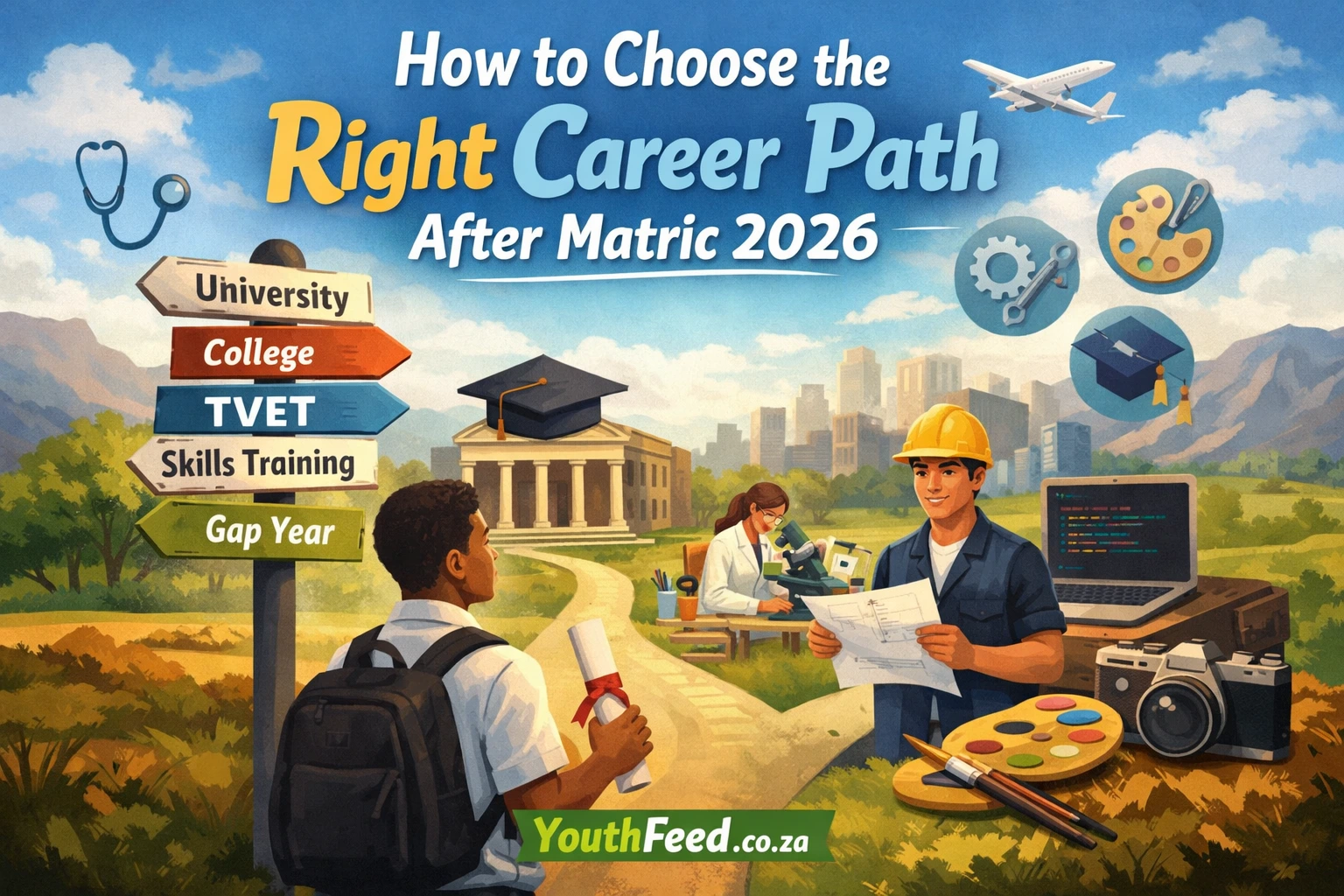
Choosing a career after finishing school is one of the biggest decisions many young people face. Understanding how to choose the right career path after matric can feel overwhelming, especially when there are so many options available, from university degrees and TVET college programmes to Learnerships, internships, and entry-level jobs.
For South African school leavers, the pressure to make the “right” choice immediately after matric can lead to confusion or rushed decisions. The reality is that career planning is a process that involves exploring your interests, understanding your strengths, and researching real opportunities in the job market.
This guide explains how to choose the right career path after matric in a practical and realistic way. It breaks down the key steps you should take, the mistakes to avoid, and the strategies that can help you move confidently from school into further education, training, or work.
What This Programme Is (In Plain English)
Choosing a career path after matric is not a single decision; it’s a process. Instead of immediately committing to a long-term profession, most students move through several stages:
- Exploring interests and skills
- Researching career options
- Comparing education or training pathways
- Gaining practical experience
- Adjusting their plans as they learn more about themselves
In South Africa, there are several main pathways available after matric:
University studies
Academic degree programmes that typically take three to four years.
TVET college qualifications
Technical and vocational training focused on practical careers.
Learnerships and apprenticeships
Structured training programmes that combine work experience with formal learning.
Internships and entry-level jobs
Opportunities that provide workplace exposure while developing professional skills.
Each path suits different types of learners, goals, and financial situations.
APPLY HERE FOR THE Thales Customer Services Intern – Banking & Payments 2026
What You’ll Actually Do When Exploring Career Options
Career decision-making is not simply choosing a job title. In reality, you will likely spend time doing the following:
Researching industries
You may explore sectors such as healthcare, engineering, business, IT, logistics, education, or trades.
Comparing qualification requirements
Some careers require degrees, while others prioritise practical training or certifications.
Talking to professionals
Speaking with people already working in a field can reveal what daily work actually looks like.
Trying short courses or entry-level work
Practical exposure often helps clarify whether a field truly suits you.
Adjusting your plan
Many professionals change direction during their early careers. Choosing a path now does not lock you into it permanently.
Understanding this process helps reduce pressure when making decisions after matric.
Who Qualifies to Start Planning a Career Path
The following checklist applies to most school leavers exploring career choices:
Minimum considerations often include:
✔ Completed or nearing completion of matric
✔ Interest in further learning or skill development
✔ Willingness to research education or training pathways
✔ Access to reliable information sources about careers
✔ Ability to evaluate personal strengths and interests
These are not strict requirements but rather useful starting points for making informed decisions.
Why Many Applicants Get Disqualified From Opportunities
Even strong candidates sometimes lose opportunities due to avoidable mistakes. Common issues include:
Applying without meeting requirements
Many applicants submit applications for programmes requiring specific subjects or qualifications they do not have.
Ignoring application instructions
Missing documents, incomplete forms, or incorrect information often lead to automatic rejection.
Poor research
Choosing a programme without understanding the industry can result in dropping out or losing motivation.
Lack of preparation
Interviews and selection processes often require basic knowledge about the company or training programme.
Submitting late applications
Deadlines are strict for most learnerships, bursaries, and academic programmes.
Being organised and well-informed greatly improves your chances of success.
Who Should Apply (Expert Guidance)
Not every career path suits every student. The right direction often depends on several factors.
You may benefit from structured training programmes if you:
- Prefer practical, hands-on work
- Want to start earning while learning
- Are interested in technical or trade careers
University study may be better suited if you:
- Enjoy academic learning
- Want to pursue professions such as law, medicine, or engineering
- Plan to specialise in a research-based field
Short courses or internships can be valuable if you:
- Want to explore different industries first
- Need work experience before committing to a career
- Are unsure about long-term study choices
There is no single “correct” path after matric. What matters most is choosing a direction that matches your strengths and interests.
Competition Level
Competition level: High
Opportunities for young people entering the workforce are highly competitive in South Africa. Many students apply for the same bursaries, internships, and learnerships each year.
Several factors increase competition:
- Large number of matriculants annually
- Limited training placements in some sectors
- High demand for funded opportunities
Because of this, preparation and early research can make a significant difference.
Tips to Improve Your Chances of Success
Students who successfully transition into careers usually follow a few practical strategies.
Start researching early
Begin exploring options while still in Grade 11 or early in Grade 12.
Build basic skills
Computer literacy, communication skills, and problem-solving ability are valuable in almost every industry.
Gain experience where possible
Part-time work, volunteering, or internships can strengthen applications.
Use reliable information sources
Official university websites, government portals, and verified company career pages provide accurate details.
Stay flexible
Your first opportunity may not be your final career destination. Many successful professionals change direction during their careers.
ALSO APPLY HERE FOR THE Implats Boilermaking Learnership 2026
Common Mistakes When Choosing a Career
School leavers often make avoidable mistakes during career planning.
Following friends’ choices
What works for someone else may not suit your interests or strengths.
Choosing based only on salary
High-paying careers still require years of study and genuine interest.
Ignoring labour market trends
Some industries offer more opportunities than others.
Rushing decisions
Choosing a course without research can lead to expensive changes later.
Not seeking guidance
Teachers, career counsellors, and professionals can offer valuable insight.
Taking time to research can prevent these problems.
Application Strategy (Step-by-Step)
If you are applying for education or training opportunities after matric, consider the following process:
Step 1: Identify industries of interest
List sectors that align with your skills or subjects.
Step 2: Research required qualifications
Check whether the career requires a degree, diploma, certificate, or practical training.
Step 3: Compare study options
Look at universities, TVET colleges, and accredited training providers.
Step 4: Track application deadlines
Create a list of closing dates to avoid missing opportunities.
Step 5: Prepare documents early
Having documents ready helps you apply quickly when opportunities open.
Step 6: Apply through official channels
Always use verified application platforms.
ALSO APPLY FOR Exxaro Graduate Internship 2026
Documents Checklist
The exact documents required depend on the institution or programme.
Commonly requested documents include:
- Certified copy of ID
- Matric certificate or latest results
- Updated CV
- Academic transcripts
- Proof of residence
- Motivational letter
Note: These documents are typical for many programmes but may vary. Applicants should always verify requirements with the official institution or employer.
Safety & Scam Check
Unfortunately, online job and training scams do exist. Protect yourself by following these guidelines:
- Never pay fees for legitimate internships, learnerships, or bursaries.
- Verify the employer’s official website before applying.
- Confirm reference numbers or programme titles where possible.
- Be cautious of WhatsApp-only applications or social media accounts asking for personal information.
- Use official careers portals or institutional websites whenever possible.
If something seems suspicious, verify the opportunity through the organization’s official contact channels.
FAQs About How to Choose the Right Career Path After Matric
1. Is it normal to feel unsure about my career after matric?
Yes. Many students take time to explore their interests before settling on a long-term career.
2. Do I have to go to university after matric?
No. TVET colleges, learnerships, and apprenticeships are also valuable pathways.
3. Can I change my career later?
Yes. Many professionals change industries or pursue additional qualifications during their careers.
4. How do I know which career suits me?
Career assessments, internships, and speaking with professionals can help identify suitable options.
5. Are learnerships a good option after matric?
They can be very valuable because they combine practical work experience with formal training.
6. Should salary be my main factor when choosing a career?
Salary is important, but interest, skills, and long-term opportunities should also be considered.
7. Where can I find reliable career information?
University websites, government education portals, and accredited training institutions are good sources.
8. What if I don’t meet university entry requirements?
You may still qualify for bridging courses, TVET programmes, or other training pathways.
9. How early should I apply for programmes?
Many applications open months before the next academic year, so early research is helpful.
10. Do internships guarantee permanent jobs?
Not always, but they often improve employability and help build valuable experience.
Final Assessment
Choosing a career path after matric is an important decision, but it does not need to be rushed. The most successful school leavers approach the process thoughtfully, researching industries, understanding their strengths, and exploring different opportunities before committing.
South Africa offers multiple pathways into the workforce, including university education, vocational training, learnerships, and internships. Each option has its own advantages depending on your interests and goals.
By focusing on reliable information, practical experience, and careful planning, students can make informed decisions that lead to sustainable careers.