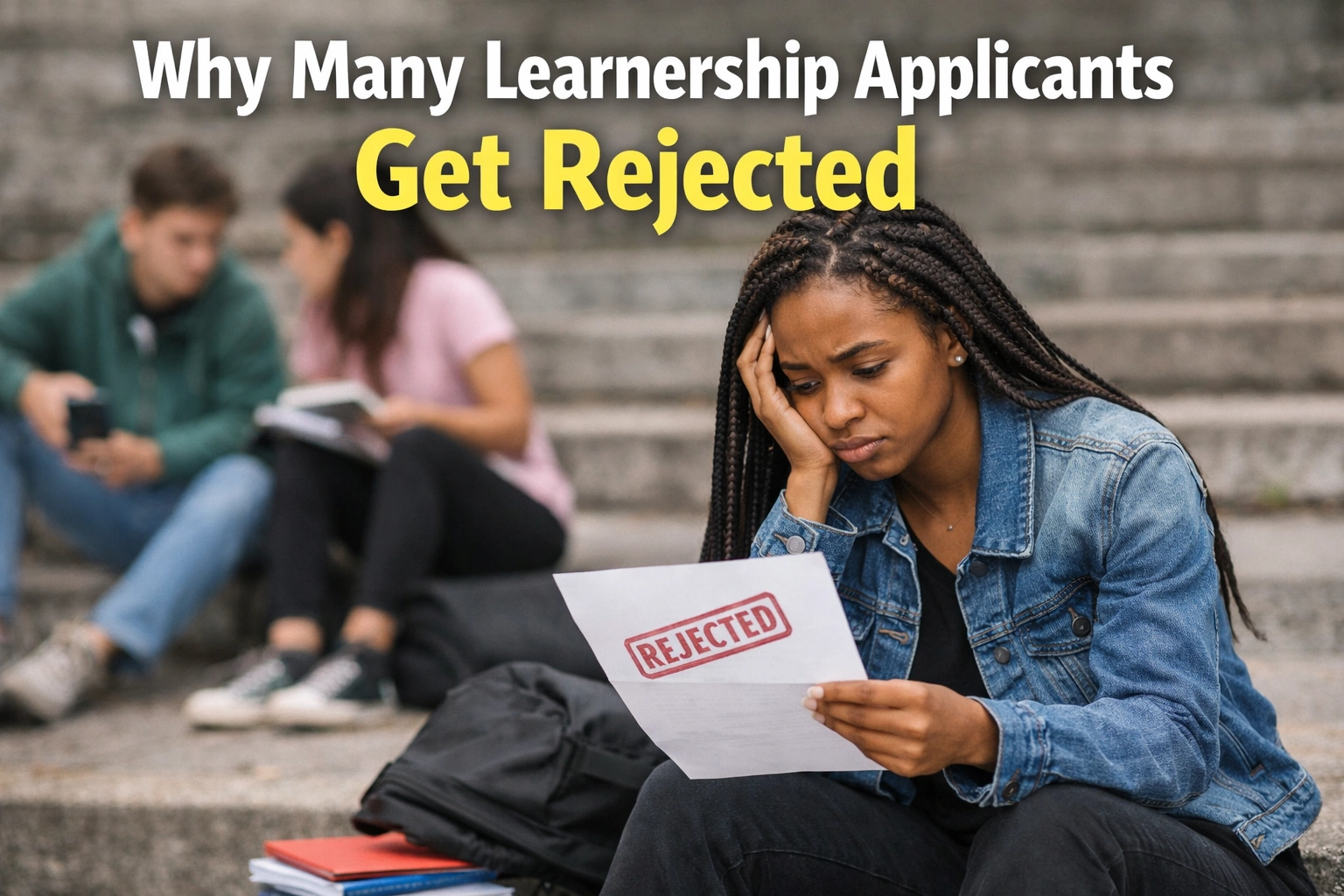
Why Many Learnership Applicants Get Rejected: Every year, thousands of hopeful young people submit applications for learnerships, only to hear nothing back—or receive a rejection email weeks later. It’s frustrating, confusing, and often discouraging. You might have the qualifications, the motivation, and even the right attitude, yet still find yourself overlooked.
The reality is this: competition for learnerships in South Africa is extremely high, and even small mistakes can significantly reduce your chances. Understanding why many learnership applicants get rejected is the first step toward improving your success rate.
This guide breaks down the real reasons behind rejections and gives you practical, actionable steps to stand out in future applications.
Understanding Why Many Learnership Applicants Get Rejected
Before diving into solutions, it’s important to understand what’s happening behind the scenes.
Employers offering learnerships often receive hundreds—sometimes thousands—of applications for a limited number of positions. Recruiters must quickly filter candidates based on strict criteria, which means:
- Applications are screened rapidly
- Minor errors can lead to instant rejection
- Only the most relevant and well-prepared candidates move forward
So when we talk about why many learnership applicants get rejected, it’s not always about lack of ability—it’s often about presentation, preparation, and alignment with requirements.
Common Reasons Why Many Learnership Applicants Get Rejected
1. Not Meeting Minimum Requirements
This is the most common reason.
Applicants often apply for opportunities without checking:
- Required qualifications (e.g. Matric, specific subjects)
- Age limits
- Location requirements
- Required documents
Even if you’re slightly outside the criteria, your application is usually automatically filtered out.
2. Incomplete Applications
Missing documents such as:
- Certified ID copy
- Academic transcripts
- CV
- Proof of residence
can immediately disqualify you.
Recruiters rarely follow up for missing items—they simply move on to the next candidate.
3. Poorly Written CVs
Your CV is your first impression. Common issues include:
- Spelling and grammar mistakes
- No structure or formatting
- Missing key information (skills, education, contact details)
- Too generic or copied content
A weak CV signals lack of effort—even if you’re capable.
4. Applying Without Tailoring Your Application
Many applicants send the same CV to every opportunity.
But employers are looking for:
- Relevant skills
- Alignment with the specific learnership field
- Clear interest in the role
Generic applications often get ignored.
5. Lack of Supporting Motivation
Some applications require a motivational letter—and many applicants either skip it or write something vague.
Recruiters want to know:
- Why you want this learnership
- What makes you suitable
- What your career goals are
Without this, your application lacks personality and direction.
6. Late Applications
Deadlines matter.
Even if your application is strong, submitting after the closing date almost guarantees rejection.
7. Not Following Instructions
If the advert says:
- “Email subject must include reference number”
- “Submit documents in PDF format”
- “Apply via a specific portal”
Ignoring these instructions shows poor attention to detail.
8. Lack of Basic Skills
Some learnerships require:
- Communication skills
- Basic computer literacy
- Numeracy
If your application doesn’t reflect these, you may be filtered out early.
Why This Issue Matters
Understanding why many learnership applicants get rejected is more than just improving your chances—it has real-life consequences.
For many young South Africans, learnerships are:
- A gateway to employment
- A way to gain work experience
- A stepping stone to long-term careers
Repeated rejection can lead to:
- Loss of confidence
- Financial stress
- Delayed career progress
But here’s the important part: most rejections are preventable.
With the right approach, you can dramatically increase your chances of success.
Step-by-Step Strategies to Avoid Rejection
Step 1: Carefully Read Every Learnership Advert
Before applying:
- Highlight key requirements
- Check eligibility criteria
- Note required documents
If you don’t meet the requirements, it’s better to focus your energy elsewhere.
Step 2: Prepare a Professional CV
Your CV should:
- Be 1–2 pages long
- Include clear headings
- Highlight education and skills
- Be free of spelling errors
Tip: Use simple, clean formatting—avoid unnecessary graphics.
Step 3: Customize Your Application
Tailor your CV and motivation letter by:
- Mentioning the specific learnership
- Highlighting relevant subjects or skills
- Showing genuine interest
This shows effort and increases your chances.
Step 4: Write a Strong Motivation Letter
Keep it simple but powerful:
- Introduce yourself
- Explain why you want the opportunity
- Show how it fits your career goals
Avoid generic phrases like “I am hardworking”—prove it with examples.
Step 5: Double-Check Your Documents
Before submitting:
- Ensure all documents are included
- Check certification dates (usually within 3 months)
- Rename files professionally (e.g., “Name_Surname_CV.pdf”)
Step 6: Apply Early
Don’t wait until the last day.
Early applications:
- Reduce the risk of technical issues
- Show eagerness
- Sometimes get reviewed first
APPLY FOR: Truworths Learnership Opportunities 2026
APPLY FOR: Fidelity Services Group Installation Learnerships 2026
Step 7: Follow Instructions Exactly
This cannot be overstated.
If instructions are ignored, your application may never be reviewed—no matter how strong it is.
Step 8: Build Basic Skills
If you lack experience, improve your profile by:
- Taking free online courses
- Learning basic computer skills
- Volunteering
These small steps can make a big difference.
Best Practices Experts Recommend
To avoid falling into the trap of why many learnership applicants get rejected, experts suggest:
- Apply strategically, not randomly
Focus on opportunities that match your profile. - Keep improving your CV regularly
Update it with new skills or experiences. - Practice interview readiness early
Some rejections happen at later stages. - Use a professional email address
Avoid nicknames or informal names. - Stay organized
Track deadlines and submissions in a notebook or spreadsheet.
Mistakes People Often Make
Even strong candidates get rejected because of simple mistakes:
- Sending the wrong documents
- Using outdated CVs
- Ignoring small details in the advert
- Copy-pasting applications without editing
- Applying for everything without focus
- Not checking email for responses
Avoiding these mistakes alone can significantly improve your chances.
FAQ:
1. Can I still apply if I don’t meet all requirements?
It depends. If you’re missing a critical requirement (like Matric), your application will likely be rejected. However, if it’s a minor preference, you may still have a chance.
2. How important is a motivation letter?
Very important. It helps you stand out and shows your personality, goals, and interest in the opportunity.
3. Do employers really read all applications?
Not always in full detail. Many use filtering systems or quick scans, which is why clarity and relevance are crucial.
4. How many learnerships should I apply for?
Quality matters more than quantity. Apply to fewer opportunities—but make each application strong and tailored.
Turning Rejection Into Opportunity
Understanding why many learnership applicants get rejected is not about discouragement—it’s about empowerment.
Most applicants are not rejected because they lack potential, but because:
- Their applications are incomplete
- Their CVs are not strong enough
- They don’t follow instructions
- They fail to stand out
The good news? These are all things you can fix.
Practical Advice You Can Apply Today:
- Review your CV and improve it
- Create a strong motivation letter template
- Double-check every application before sending
- Apply only where you meet requirements
- Stay consistent and patient
Rejection is part of the process—but with the right approach, your chances of success will increase significantly.
APPLY FOR: Truworths Learnership Opportunities 2026
APPLY FOR: Fidelity Services Group Installation Learnerships 2026