There’s a growing frustration quietly spreading among young job seekers in South Africa, and it’s not just about the lack of opportunities. It’s about missing out on opportunities that were actually within reach.
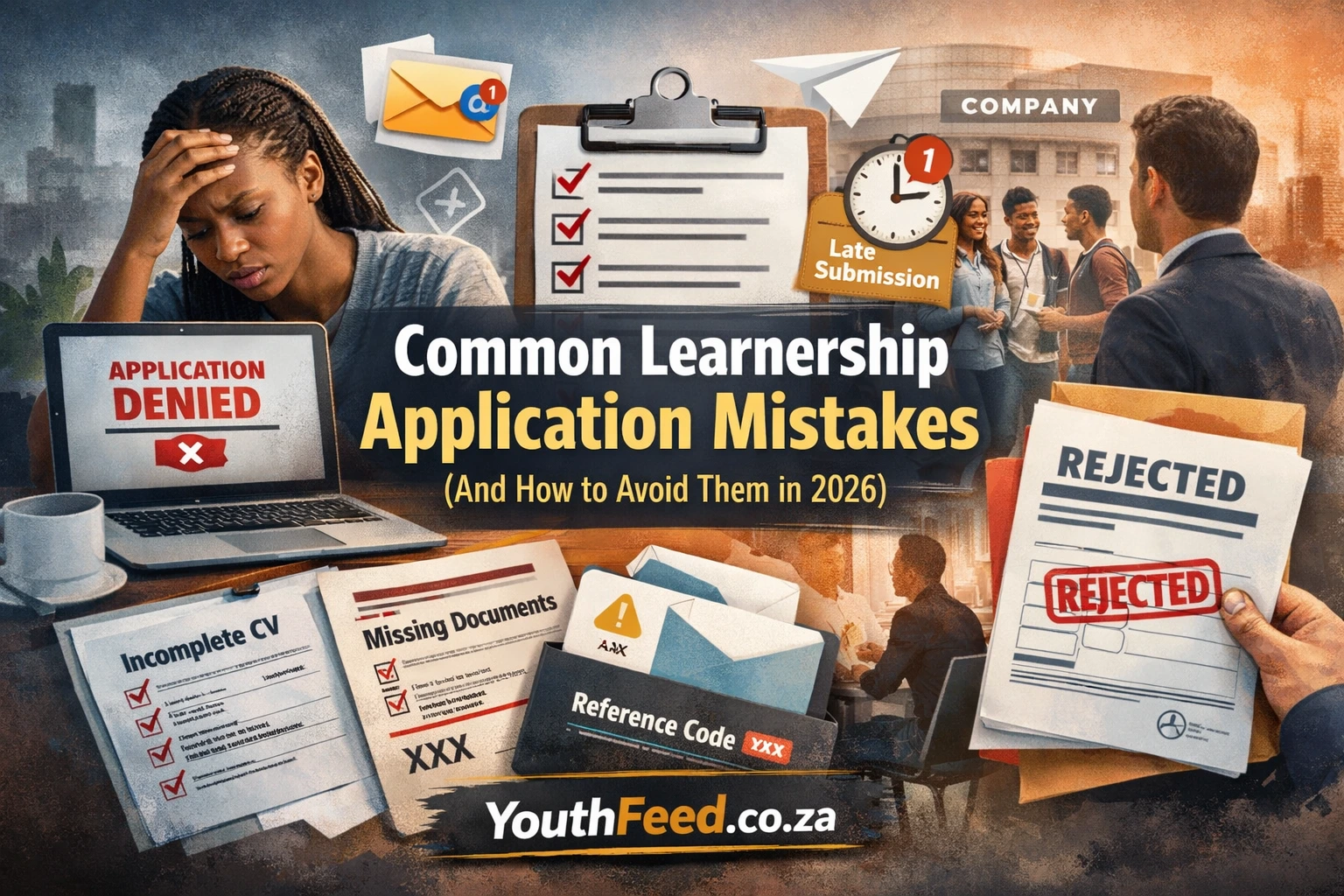
Search trends and online discussions in early 2026 show a sharp spike in queries around Common Learnership Application Mistakes. More applicants are asking: “Why didn’t I get shortlisted?” or “What did I do wrong?”
It’s not always about qualifications. Increasingly, it’s about execution.
In a competitive learnership landscape where thousands apply for a handful of positions, small mistakes can quietly disqualify even strong candidates. And in the wake of the February 2026 Google Discover update which prioritizes useful, experience-driven content this topic has become more relevant than ever.
Let’s unpack what’s really happening.
The Rise of Learnership Competition: How We Got Here
Over the past few years, learnerships have shifted from being a “backup plan” to becoming a primary entry point into the workforce.
Government-backed initiatives, private sector training programs, and partnerships between SETAs and companies have expanded access but not evenly. While opportunities have increased, so has awareness. Platforms like Youth-focused blogs, TikTok career pages, and WhatsApp groups have made Learnerships more visible than ever.
The result?
More applicants. Same or only slightly increased slots.
This imbalance has created a new reality:
- Recruiters receive thousands of applications per intake
- Screening processes are faster and stricter
- Minor errors can instantly eliminate candidates
In this environment, avoiding common mistakes is no longer optional it’s essential.
READ MORE ABOUT: How Employers Benefit From Learnership Programmes in South Africa 2026
The Most Common Learnership Application Mistakes
Let’s get straight to the core issue. These are the mistakes that repeatedly cost applicants opportunities.
1. Applying Without Reading the Requirements Properly
This is by far the most widespread issue.
Applicants often skim through posts and apply immediately, especially when they see phrases like “no experience needed.” But each learnership has specific criteria:
- Age limits
- Qualification levels
- Required subjects (like Maths or English)
- Location restrictions
Submitting an application that doesn’t meet these criteria often leads to automatic rejection.
What to do instead:
Slow down. Read every requirement carefully. If you don’t meet all essential criteria, reconsider applying or look for alternatives that match your profile.
2. Submitting Incomplete Documents
Another silent deal-breaker.
Common missing items include:
- Certified ID copy
- Updated CV
- Matric certificate
- Proof of residence
In many cases, applications are filtered out before a human even sees them.
What to do instead:
Create a “learnership folder” on your phone or laptop with all required documents:
- Keep them updated
- Use clear file names (e.g., John_Doe_CV_2026.pdf)
- Ensure certifications are recent (usually within 3 months)
APPLY HERE FOR THE Thales Customer Services Intern – Banking & Payments 2026
3. Using a Generic or Weak CV
A one-size-fits-all CV doesn’t work anymore.
Recruiters can quickly tell when a CV lacks effort:
- No clear structure
- No relevant skills listed
- No tailoring to the learnership field
Even if you have no work experience, your CV should reflect:
- School achievements
- Volunteer work
- Skills (communication, teamwork, computer literacy)
What to do instead:
Customize your CV for each application. Highlight anything that aligns with the specific learnership.
4. Ignoring Instructions in the Application Process
Some applications include specific instructions like:
- “Use reference code XYZ”
- “Email subject must include your ID number”
- “Attach documents in PDF format only”
Ignoring these details can disqualify you instantly.
What to do instead:
Follow instructions exactly. Think of it as your first test because it is.
5. Applying Too Late (or Last Minute)
Timing matters more than most applicants realize.
Many organizations review applications as they come in rather than waiting for the closing date. By the time you apply on the last day, the shortlist may already be full.
What to do instead:
Apply as early as possible preferably within the first few days of the opportunity being posted.
READ MORE ABOUT Learnership vs Internship vs Apprenticeship 2026
6. Poor Email Communication
This is especially relevant for email-based applications.
Common issues include:
- No subject line
- Informal language (“Hi pls see attached”)
- No introduction
This creates a negative first impression.
What to do instead:
Write a short, professional message:
- Greet properly
- State the position you’re applying for
- Mention attached documents
7. Not Preparing for Follow-Up or Interviews
Some applicants get shortlisted but then lose the opportunity at the next stage.
Reasons include:
- Not answering calls from unknown numbers
- Being unprepared for interviews
- Lacking basic knowledge about the company
What to do instead:
Stay alert after applying:
- Answer calls professionally
- Research the company
- Practice common interview questions
Recent Developments: Why These Mistakes Are Increasing
Several trends are making these mistakes more common in 2026:
Digital Overload
With opportunities shared across multiple platforms, applicants are applying in bulk often without careful attention.
Mobile-First Applications
Many people apply using smartphones, which increases the chances of:
- Uploading wrong files
- Skipping details
- Formatting issues
Algorithmic Screening
Some companies now use automated systems to filter applications. These systems don’t “forgive” mistakes they simply reject incomplete or incorrect submissions.
Public Reaction: Frustration, Confusion, and Misinformation
Online discussions reveal a pattern:
- Applicants feel they are being unfairly overlooked
- Many believe selection is random or biased
- Some assume connections matter more than merit
While systemic challenges do exist, a large portion of rejections comes down to avoidable errors.
There’s also growing misinformation:
- “Apply to everything, even if you don’t qualify”
- “Details don’t matter, just send your CV quickly”
These myths are actively hurting applicants.
Why This Matters Right Now
This isn’t just about Learnerships it’s about access to opportunity.
In South Africa’s current economic climate, Learnerships serve as a bridge between education and employment. Missing out due to preventable mistakes can delay someone’s career by months or even years.
The February 2026 shift in content visibility (especially on platforms like Google Discover) reflects a broader demand for practical, experience-based guidance. People aren’t just looking for opportunities—they’re looking for ways to succeed in securing them.
And right now, the difference between success and rejection is often in the details.
What Could Happen Next
Looking ahead, several developments could shape the learnership application landscape:
1. More Structured Application Platforms
We may see a move toward centralized systems where applicants:
- Upload documents once
- Apply to multiple opportunities more efficiently
- Receive clearer feedback
2. Increased Use of AI Screening
Automation will likely become more common, making accuracy and completeness even more critical.
3. Greater Focus on Soft Skills
Beyond qualifications, employers may place more emphasis on:
- Communication
- Attitude
- Adaptability
This could change how applications are evaluated.
4. Better Applicant Education
As awareness grows, more platforms will focus on:
- Application guidance
- CV building
- Interview preparation
This could gradually reduce common mistakes but only for those who actively seek and apply the advice.
How to Stand Out in 2026
Avoiding mistakes is the first step. Standing out requires a bit more intention.
Here’s what makes a difference:
- Clarity: A clean, well-structured CV
- Relevance: Tailored applications
- Professionalism: Polished communication
- Consistency: Applying regularly and correctly
Think of your application as your personal brand. Every detail contributes to how you’re perceived.
Final Thoughts
The conversation around Common Learnership Application Mistakes is growing for a reason.
It’s no longer enough to simply apply you have to apply well.
Opportunities exist. In many cases, more than before. But access depends on awareness, attention to detail, and a willingness to improve.
For many applicants, the difference between rejection and success isn’t luck, it’s avoiding the small, preventable errors that quietly close doors.
Frequently Asked Questions
1. What is the biggest mistake in learnership applications?
Not reading and meeting the requirements properly is the most common and costly mistake.
2. Do I need experience to apply for a learnership?
No, most learnerships are designed for people without experience—but you still need to show relevant skills and willingness to learn.
3. How important is my CV for a learnership?
Very important. Even without experience, your CV must be clear, structured, and tailored to the opportunity.
4. Can applying to many learnerships increase my chances?
Yes—but only if each application is done correctly. Quantity without quality can hurt your chances.
5. What should I do after applying?
Stay reachable, prepare for interviews, and keep track of your applications.
Conclusion
The reality is simple but often overlooked: most learnership rejections aren’t always about a lack of opportunity, they’re about missed details.
As competition intensifies in 2026, the margin for error has become incredibly small. A missing document, a rushed application, or a poorly written CV can quietly close doors before you even get a chance to prove yourself. And in a system where recruiters are overwhelmed with applications, there’s little room for second chances.
But that’s also where the opportunity lies.
Unlike factors you can’t control, like limited positions or economic conditions these common mistakes are entirely within your power to fix. Taking a few extra minutes to read instructions carefully, prepare your documents properly, and present yourself professionally can dramatically improve your chances.
The shift happening now is clear: success is no longer just about applying, but about applying strategically.
For South African youth navigating the learnership space, this mindset could make all the difference. Because in a crowded field, the applicants who stand out aren’t always the most qualified, they’re the most prepared.
And sometimes, avoiding one simple mistake is all it takes to turn a missed opportunity into a life-changing one.