The Real Challenge Students Face
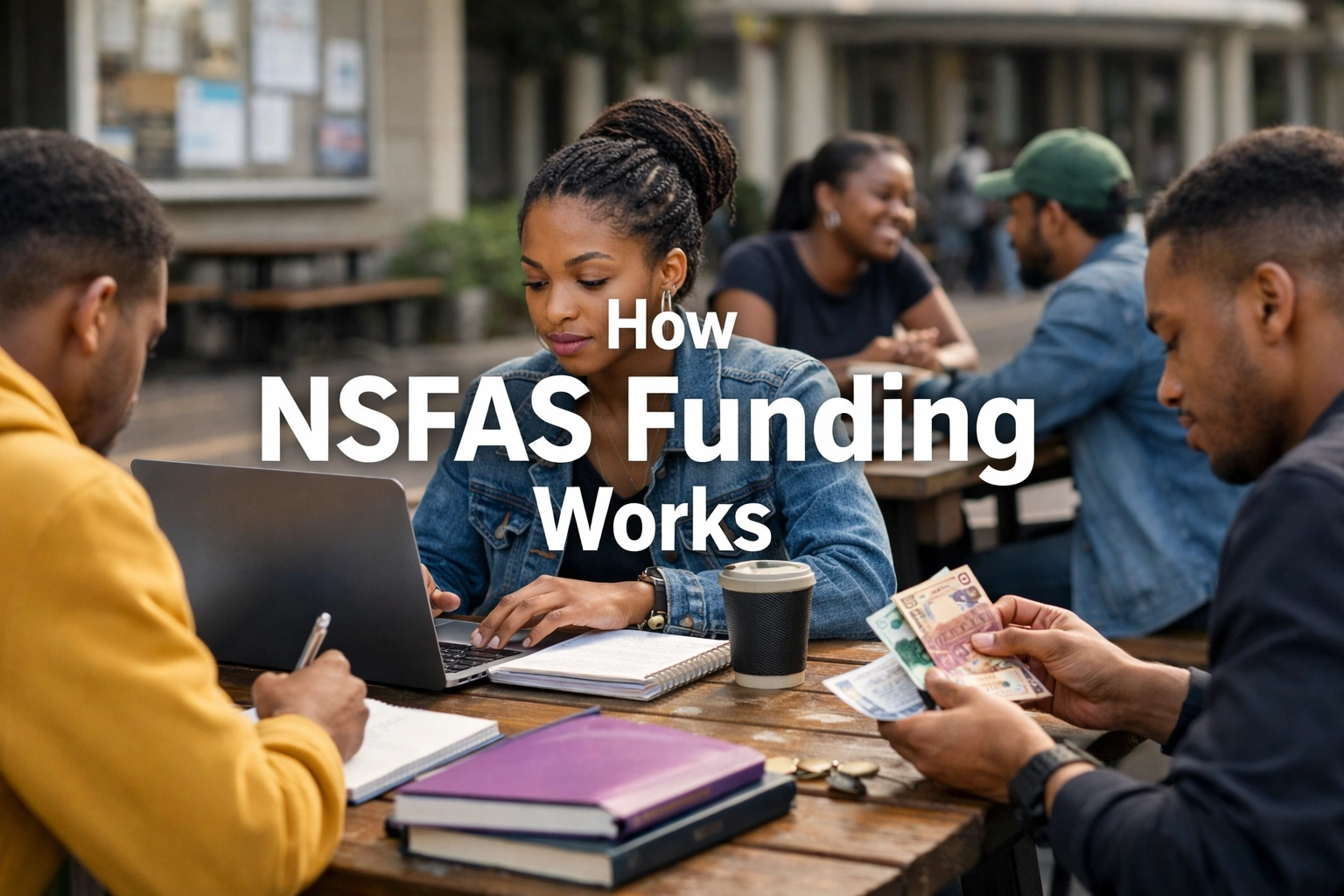
How NSFAS Funding Works: For many South African students, getting into university or college is only half the battle. The bigger challenge is figuring out how to pay for it. Tuition fees, accommodation, textbooks, transport, and daily living costs can quickly add up to tens of thousands of rand each year. Without financial support, higher education can feel completely out of reach.
That’s where the National Student Financial Aid Scheme (NSFAS) comes in. But while millions apply every year, many students still don’t fully understand how NSFAS funding works, what it covers, or how to manage it properly once approved.
This guide breaks it all down in a practical, easy-to-follow way—so you can make smarter decisions and avoid costly mistakes.
What Is NSFAS and How Does It Work?
Before diving into strategies, it’s important to clearly understand how NSFAS funding works.
NSFAS is a government-funded financial aid scheme designed to help students from low-income households access higher education at public universities and TVET colleges in South Africa.
Who Qualifies?
You may qualify if:
- You are a South African citizen
- Your household income is:
- R350,000 or less per year (general applicants)
- Up to R600,000 for students with disabilities
- You are studying (or planning to study) at a public university or TVET college
- You meet academic requirements
What Does NSFAS Cover?
NSFAS funding is comprehensive. It typically includes:
- Tuition fees – Paid directly to the institution
- Accommodation – Either on-campus or approved private housing
- Living allowance – For food and basic needs
- Transport allowance – For students commuting from home
- Learning materials – Textbooks and study resources
- Personal care allowance – For hygiene essentials
Is NSFAS a Loan or a Bursary?
This is where many students get confused.
Today, NSFAS mainly operates as a bursary, not a loan. That means:
- You do not need to repay it
- BUT you must meet academic progression requirements
If you fail repeatedly or drop out without valid reasons, you risk losing funding.
NSFAS | National Student Financial Aid Scheme
Why This Issue Matters
Understanding how NSFAS funding works is not just about getting money—it can shape your entire future.
Here’s why it matters:
1. It Determines Whether You Can Study at All
For many households, NSFAS is the only pathway into higher education. Without it, students may delay or abandon their studies entirely.
2. It Affects Your Academic Success
Financial stress is one of the biggest reasons students drop out. When funding is used properly, it allows you to focus on studying instead of survival.
3. It Impacts Your Long-Term Opportunities
Graduating with a qualification opens doors to employment, entrepreneurship, and economic mobility.
4. Misunderstanding It Can Cost You
Students who don’t understand the rules often:
- Lose funding due to poor academic performance
- Spend allowances incorrectly
- Miss important deadlines
In short, knowing how NSFAS works is just as important as getting approved.
How NSFAS Funding Works: Step-by-Step Guide
Let’s break down the full process from application to receiving your money.
Step 1: Apply Online
Applications usually open around September each year.
You’ll need:
- South African ID or birth certificate
- Proof of household income
- Parent/guardian details
- Academic results
APPLY HERE: NSFAS | National Student Financial Aid Scheme
Step 2: Verification and Evaluation
NSFAS checks:
- Your financial eligibility
- Your academic admission status
- Supporting documents
This process can take several weeks.
Step 3: Funding Decision
You’ll receive one of the following outcomes:
- Approved
- Provisionally funded
- Rejected (with reasons)
If rejected, you can submit an appeal.
Step 4: Registration at Your Institution
Funding is only activated once you:
- Are accepted by a university or TVET college
- Complete your registration
Step 5: Signing the Bursary Agreement
You must sign an agreement confirming:
- You understand the rules
- You will meet academic requirements
Step 6: Receiving Allowances
Allowances are paid through:
- NSFAS wallet (for TVET colleges)
- Direct payment systems or institutions (universities)
Payments are usually monthly.
ALSO READ ABOUT: Why Many Learnership Applicants Get Rejected
Managing Your NSFAS Allowance Wisely
Getting funded is just the beginning. Managing your money properly is what determines your success.
Prioritise Essentials
Use your allowance for:
- Food
- Transport
- Study materials
Avoid spending on non-essential items early in the month.
Budget Monthly
Break your allowance into weekly portions to avoid running out.
Track Your Spending
Use simple tools like:
- Notes app
- Budgeting apps
- Bank statements
Plan for Emergencies
Set aside a small portion each month if possible.
Best Practices Experts Recommend
Students who succeed with NSFAS funding often follow these habits:
Stay Academically Eligible
You must pass a certain percentage of your modules each year. Make studying your top priority.
Keep Your Information Updated
Always update:
- Contact details
- Banking information
- Academic status
Check NSFAS Communication Regularly
Important updates are sent via:
- SMS
- Student portals
Missing a message could delay your funding.
Choose Accommodation Carefully
Ensure your housing is NSFAS-approved to avoid payment issues.
Ask for Help Early
If you’re struggling:
- Speak to your institution
- Contact NSFAS support
Don’t wait until it’s too late.
Mistakes People Often Make
Even smart students lose funding due to avoidable errors.
Missing Deadlines
Late applications are usually not accepted.
Submitting Incorrect Documents
Wrong or incomplete documents can lead to rejection.
Failing Too Many Modules
Academic performance directly affects continued funding.
Misusing Allowances
Spending money on non-essentials can lead to financial stress.
Ignoring Appeals Process
If rejected, many students don’t appeal—even when they qualify.
Frequently Asked Questions (FAQs)
1. Can I apply for NSFAS if I already started studying?
Yes. You can apply while already enrolled, as long as you meet eligibility criteria.
2. What happens if I fail a year?
NSFAS may still fund you, but only within certain limits. Repeated failure can lead to cancellation.
3. Does NSFAS fund private colleges?
No. NSFAS only funds students at public universities and TVET colleges.
4. How long does NSFAS funding last?
It typically covers the minimum duration of your qualification plus one additional year.
Making NSFAS Work for You
Understanding how NSFAS funding works gives you a major advantage—not just in accessing education, but in completing it successfully.
Here’s what to remember:
- Apply early and correctly
- Understand what is covered
- Manage your money wisely
- Stay academically focused
- Respond quickly to NSFAS communication
NSFAS is more than just financial aid—it’s an opportunity. But like any opportunity, it only works if you use it properly.
If you treat your funding with responsibility and discipline, it can carry you from your first lecture all the way to graduation—and beyond
NSFAS | National Student Financial Aid Scheme
ALSO READ ABOUT: Why Many Learnership Applicants Get Rejected