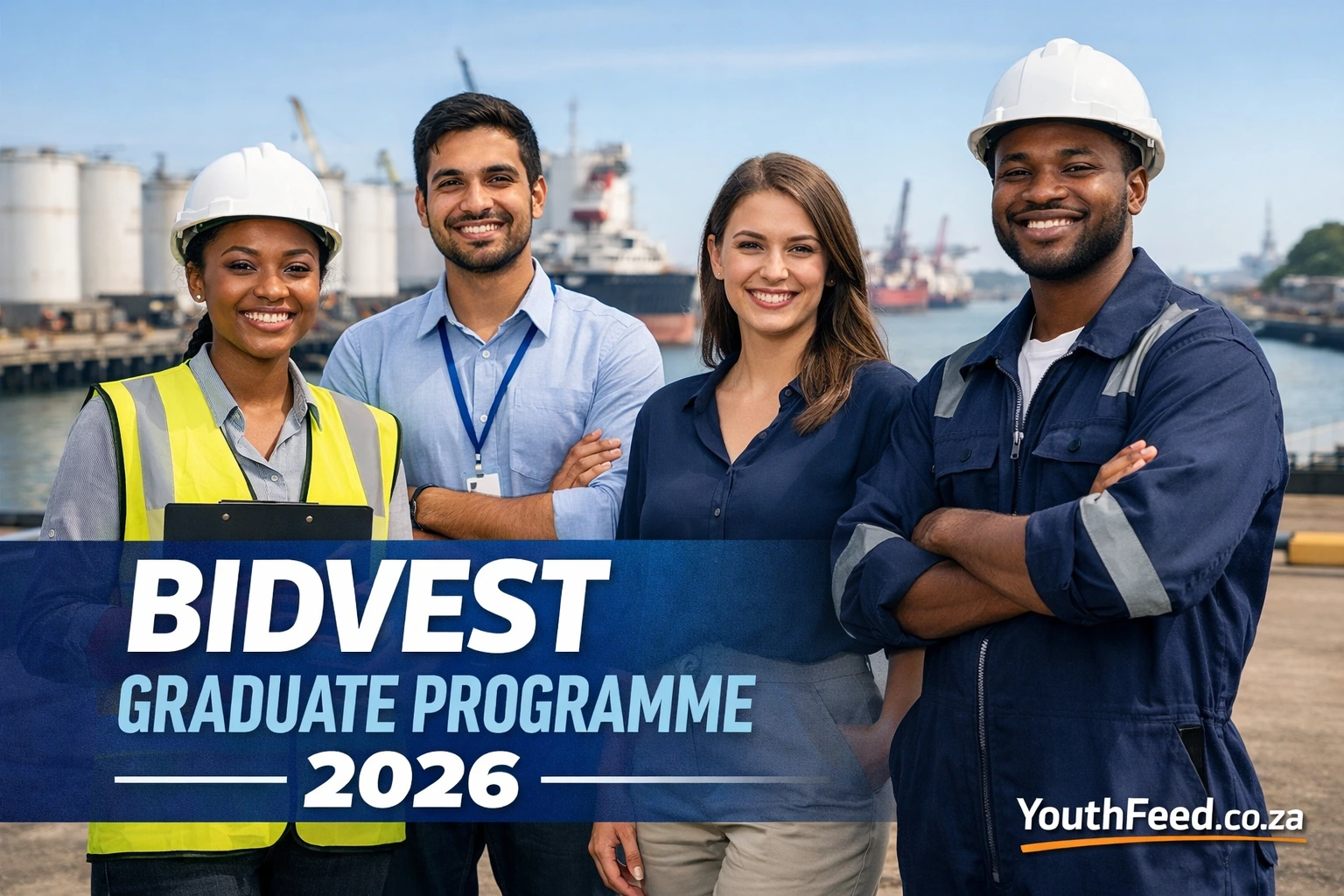
There is a reason the Bidvest Graduate Programme is beginning to stand out in South Africa’s crowded early-career job market and it is not only because it carries a trusted corporate name.
At a time when thousands of graduates are sending out applications with little feedback, structured programmes like this are attracting attention for one simple reason: they offer something many entry-level job ads still don’t a genuine pathway into the workplace without demanding years of prior experience.
That matters more in 2026 than many employers may realize.
For recent graduates in engineering, logistics, and supply chain-related fields, the Bidvest Graduate Programme 2026 is the kind of listing that instantly raises eyebrows. It is based in Durban, tied to a recognized industrial business unit, and designed to help graduates move from qualification to practical work exposure. In an economy where “entry level” often still feels anything but entry level, that positioning is powerful.
But beyond the application details, this opportunity says something bigger about where graduate hiring in South Africa is heading and what young professionals now value most.
A Graduate Opportunity That Speaks to a Bigger Problem
South African graduates have been stuck in a frustrating loop for years.
You study. You qualify. You search. Then you discover that even “junior” roles often want experience you could only get if someone had hired you in the first place.
That contradiction has become one of the defining frustrations of the youth employment conversation. It is also exactly why programmes like the Bidvest Graduate Programme keep gaining traction online and among job-seeking communities.
This specific opening, listed under Bidvest Tank Terminals, offers four graduate contract positions in Durban, KwaZulu-Natal, with applications closing on 2 April 2026. The programme sits within the Transformation department, and the successful candidates will report to a manager while gaining practical exposure across the business.
That structure is important. It signals that this is not simply a vacancy meant to fill an operational gap. It is designed as a transition opportunity — a bridge between education and employability.
And right now, that bridge is exactly what many graduates are looking for.
What the Bidvest Graduate Programme 2026 Is Offering
On paper, the opportunity looks straightforward. But the details reveal why it is likely to generate strong interest.
The programme is open to South African citizens with a valid South African ID, and importantly, it requires no previous work experience. That single line will probably be the biggest attention-grabber for many applicants.
Eligible candidates must have completed a Diploma or Degree in one of the following fields:
- Mechanical Engineering
- Electrical Engineering
- Chemical Engineering
- Logistics Management
- Supply Chain Management
That combination is notable because it reflects the real operational needs of a tank terminals environment. This is not a generic “graduate intake” trying to appeal to everyone. It is targeted. And that tends to make programmes more meaningful when done well.
The stated purpose is to:
- train graduates in practical workplace skills,
- provide on-the-job experience,
- and expose them to different departments within BTT (Bidvest Tank Terminals).
In other words, this is less about immediate perfection and more about professional formation.
That is exactly the kind of framing many young applicants have been hoping to see more often.
ALSO APPLY FOR: CIPC Internships 2026
Why This Programme Feels Timely in 2026
The timing of the Bidvest Graduate Programme is part of what makes it relevant.
In 2026, the conversation around employability has shifted. Graduates are no longer only looking for “a job.” They are increasingly looking for opportunities that offer experience, mobility, credibility, and practical learning.
That shift has been shaped by years of uncertainty.
The job market has become more competitive, and graduate unemployment remains one of South Africa’s most urgent socio-economic concerns. At the same time, industries connected to logistics, infrastructure, engineering, and industrial operations continue to play a major role in the country’s economic backbone.
So when a company linked to critical infrastructure and terminal operations opens a structured graduate opportunity in Durban, it does more than create four positions. It enters a wider conversation about access, skills development, and where future industrial talent will come from.
That is why opportunities like this often spread quickly in student groups, WhatsApp job circles, LinkedIn posts, and graduate-focused websites. They are not just vacancies. They are signals.
And graduates are paying attention to those signals more closely than ever.
The Durban Factor Should Not Be Overlooked
Location matters more than people sometimes admit.
The fact that this programme is based in Durban is likely to make it especially attractive for graduates in KwaZulu-Natal, but it may also pull applications from elsewhere in South Africa. Durban remains a strategically important logistics and industrial hub, particularly for supply chain, engineering, and terminal-related operations.
That matters because the workplace context of a graduate programme can be just as valuable as the job title itself.
A graduate placed in a real operational environment — especially one connected to transport, storage, logistics, and industrial systems — is not only learning technical habits. They are learning how major systems function in practice.
That kind of exposure can shape an entire career.
For candidates in Mechanical Engineering, Electrical Engineering, or Chemical Engineering, that environment could offer meaningful insight into how industrial infrastructure is managed and maintained. For those in Logistics Management and Supply Chain Management, it may provide a front-row view into how movement, storage, coordination, and planning actually work beyond the classroom.
And in a hiring market where employers increasingly value “practical understanding,” that kind of environment is not a small detail. It is a major asset.
ALSO APPLY FOR: NEF Graduate Internship Programme 2026
Recent Developments: Why Graduate Programmes Are Being Watched More Closely
One of the more interesting shifts in 2026 is that graduate programmes are no longer treated as side-note HR initiatives.
They are now being watched much more closely — by graduates, by universities, and even by employers themselves.
Why?
Because the quality of these programmes says a lot about how serious companies are about talent development.
A weak graduate programme often becomes obvious quickly. It leaves participants underused, unsupported, or parked in administrative limbo. A stronger programme, by contrast, tends to give structured exposure, meaningful mentorship, and a clearer sense of progression.
The wording in this Bidvest opportunity suggests an emphasis on integration and practical development rather than passive observation. That is a positive sign, especially because many graduates today are increasingly skeptical of “development” opportunities that sound good on paper but offer little real growth.
There is also a broader corporate trend worth noting: more companies are under pressure to demonstrate that they are not only hiring experienced professionals, but also contributing to the future talent pipeline.
That makes graduate programmes more than a recruitment tool. They become part of the company’s broader credibility story.
And that is exactly why listings like the Bidvest Graduate Programme 2026 tend to generate disproportionate attention relative to the number of actual positions available.
Public Reaction: Why Graduates Respond Strongly to Opportunities Like This
If you spend enough time around South African graduate job spaces online, you begin to notice a pattern.
Opportunities with three traits tend to get the strongest reaction:
- No experience required
- Recognizable employer
- Field-specific relevance
The Bidvest Graduate Programme ticks all three.
That combination creates something many job seekers rarely get: clarity.
Applicants can quickly see whether they qualify. They can identify whether the programme fits their field. And they can understand that the employer is not asking for unrealistic experience expectations from the outset.
That does not make the opportunity easy to secure. In fact, it likely means competition will be intense.
But there is a difference between a competitive opportunity and a discouraging one. This one feels competitive in a way that still seems reachable, which is often what drives high engagement.
There is also likely to be particular interest because of the Employment Equity and internal promotion policy language included in the advert. While internal candidates may be considered first, the listing still reflects an effort to build future capability and align recruitment with broader transformation goals.
That dimension will matter to many applicants, especially those trying to understand how companies are balancing workforce development with long-term equity commitments.
Why This Matters Right Now
This matters right now because graduate opportunities are no longer judged only by whether they exist.
They are judged by whether they are real, accessible, and career-shaping.
The Bidvest Graduate Programme 2026 stands out because it appears to answer all three concerns in a practical way.
It is real because it is clearly linked to a specific business unit, department, location, and reporting structure.
It is accessible because it does not demand prior experience and accepts graduates from clearly defined disciplines.
And it is potentially career-shaping because it focuses on workplace integration, departmental exposure, and practical skills development.
That combination is highly relevant in 2026, when many graduates are trying to avoid dead-end entry points and instead prioritize opportunities that can build momentum.
There is also a wider economic relevance here.
South Africa’s long-term growth depends heavily on whether young professionals can move into productive roles across engineering, logistics, and operational sectors. If that transition keeps breaking down, the consequences are bigger than individual disappointment. It affects skills pipelines, business continuity, and future industrial competitiveness.
So while this may look like “just another graduate post” on the surface, it actually reflects a much bigger national challenge and a possible piece of the solution.
What Applicants Should Read Between the Lines
One of the smartest things any applicant can do is go beyond the qualification list and look at what the advert is really asking for.
The competencies listed here are revealing:
- ability to work in a logical and organized manner,
- good workplace ethics,
- strong written and verbal communication,
- integrity and confidentiality,
- and the ability to work independently or within a team.
Those are not filler phrases.
In a technical or terminal-related environment, those qualities matter a great deal. Employers are not only looking for academic knowledge. They are looking for people who can function in a structured, responsible, and sometimes high-accountability environment.
That means applicants should tailor their CVs and applications accordingly.
A candidate who only lists modules and qualifications may miss the opportunity to show readiness. A stronger application would likely connect academic work, projects, practical training, leadership roles, or student responsibilities to the kind of workplace behaviors the employer is emphasizing.
That is where many applicants quietly lose ground — not because they are unqualified, but because they undersell their relevance.
And in a competitive programme like this, relevance matters as much as eligibility.
What Could Happen Next
The most immediate outcome is simple: this programme is likely to attract a significant volume of applications before the 2 April 2026 closing date.
That means shortlisted candidates will probably need more than a compliant CV to stand out.
But the more interesting long-term question is what opportunities like this may signal for future hiring.
If structured graduate intakes continue receiving strong engagement and producing good outcomes, more employers may feel pressure to expand them — especially in sectors where technical succession planning is becoming increasingly important.
That could mean:
- more targeted graduate pipelines,
- stronger practical training models,
- and more field-specific early-career pathways.
On the other hand, if companies continue opening only a small number of graduate roles while demand keeps rising, the competition gap may become even more intense. That would reinforce the need for graduates to become more strategic, more adaptable, and more deliberate in how they position themselves.
For Bidvest itself, a successful intake could help strengthen future talent development within its operational ecosystem. And for applicants, even one structured opportunity like this can become the first serious step into a much larger career.
That is why programmes like this are watched so closely.
They are small in number, but often large in consequence.
APPLY HERE: Bidvest Graduate Programme 2026
FAQ: Bidvest Graduate Programme 2026
1) What is the closing date for the Bidvest Graduate Programme 2026?
The closing date is 2 April 2026.
2) Does the Bidvest Graduate Programme require work experience?
No. The advert states that no experience is required.
3) Which qualifications are accepted?
Applicants need a completed Diploma or Degree in:
Mechanical Engineering
Electrical Engineering
Chemical Engineering
Logistics Management
Supply Chain Management
4) Where is the programme based?
The opportunity is based in Durban, KwaZulu-Natal, South Africa.
5) How many positions are available?
There are 4 graduate positions available.
Final Thoughts
The Bidvest Graduate Programme 2026 is not trending because it promises overnight success.
It is attracting attention because it offers something more useful: a plausible professional starting point.
That may sound less dramatic, but in the real world of South African graduate job hunting, it is often far more valuable.
For engineering, logistics, and supply chain graduates, this opportunity represents more than a contract role in Durban. It represents access to exposure, to structure, to practical learning, and potentially to a much stronger career foundation.
And in 2026, that is exactly the kind of opportunity many graduates are searching for.
If you qualify, this is the kind of application worth taking seriously not because it guarantees a future, but because it may help you build one.
READY TO PUBLISH