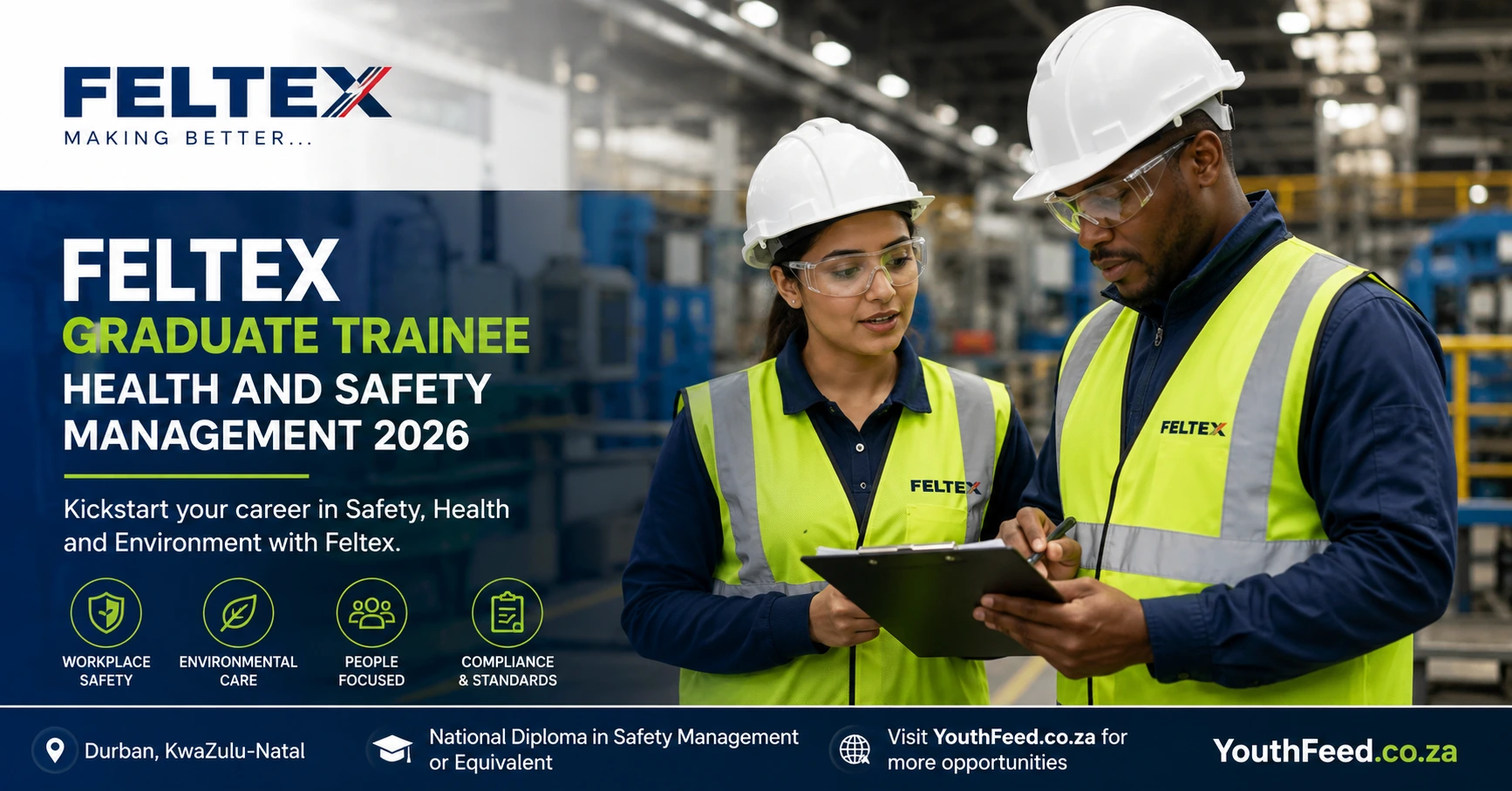
The race for graduate opportunities in South Africa has become increasingly competitive in 2026, but some vacancies are standing out more than others. One of them is the Feltex Graduate Trainee Health and Safety Management opportunity in Durban, KwaZulu-Natal a role that is quietly attracting attention among graduates eager to break into the manufacturing and industrial safety sector.
At first glance, it may seem like another standard graduate programme. But a closer look reveals why this position matters in the current employment climate. Companies across South Africa are under growing pressure to strengthen workplace safety, environmental compliance, and operational accountability. That shift has transformed health and safety graduates from “support staff” into essential contributors inside modern factories and production plants.
For young professionals trying to secure stable career pathways after graduation, opportunities like this are increasingly valuable. The manufacturing sector has been reshaping itself after years of supply chain disruption, tighter compliance standards, and renewed focus on employee wellbeing. Employers are no longer simply hiring graduates to observe operations they want trainees who can actively support risk management, ISO systems, and safety culture from day one.
That is exactly why the Feltex Graduate Trainee Health and Safety Management programme is trending among graduates looking for practical experience that could open long-term industrial career opportunities.
A Closer Look at the Feltex Graduate Opportunity
Feltex is recruiting a Graduate Trainee for Health and Safety Management within its Foam division in Durban, KwaZulu-Natal. The opportunity falls under the SHE department and is structured as a temporary graduate trainee role.
The closing date is set for 21 May 2026, which has added urgency among applicants currently monitoring graduate programmes and entry-level industrial opportunities.
According to the job advert, Feltex is looking for candidates who have completed a National Diploma in Safety Management or an equivalent qualification. But beyond the academic requirement, the company is clearly prioritising graduates who understand modern compliance frameworks and manufacturing systems.
That includes familiarity with:
- ISO 14001 environmental management systems
- ISO 45001 occupational health and safety standards
- IATF manufacturing quality requirements
- Workplace incident investigation procedures
- Safety audits and compliance monitoring
For many graduates, this is significant because employers increasingly expect candidates to arrive with at least foundational exposure to international compliance standards.
Why Manufacturing Safety Roles Are Becoming More Important
Over the past few years, workplace safety has evolved from a compliance checkbox into a major operational priority. Across industrial sectors, companies are facing stronger scrutiny around environmental impact, worker protection, and operational accountability.
This trend is especially visible inside manufacturing plants.
Industrial employers are investing more heavily in SHE (Safety, Health, and Environment) departments because operational disruptions caused by accidents, unsafe practices, or compliance failures can become extremely expensive. A single safety incident can affect production schedules, insurance costs, legal exposure, and even company reputation.
As a result, graduate trainees entering safety management are now being exposed to responsibilities that carry real operational value.
The Feltex programme reflects this broader industry shift. Rather than limiting trainees to administrative support, the role includes practical exposure to:
- Hazard identification
- Incident investigations
- Emergency drill coordination
- Toolbox talks
- Safety induction training
- Risk audits
- SharePoint-based SHE system management
This type of hands-on exposure is exactly what many graduates struggle to obtain after completing their qualifications.
The Durban Manufacturing Environment Adds Extra Relevance
The location of the programme also matters.
Durban remains one of South Africa’s most important industrial and logistics hubs. Manufacturing activity in KwaZulu-Natal continues to play a major role in automotive production, consumer goods, chemicals, packaging, and export-related industries.
For graduates, gaining experience in Durban’s industrial ecosystem can become a stepping stone toward larger operational, compliance, or risk-management careers.
The automotive and manufacturing supply chain sectors in particular continue to emphasise compliance with global standards. Employers connected to international production networks often require strict adherence to environmental and occupational safety frameworks.
That means graduates entering these environments gain exposure to systems and procedures that may later transfer across multiple industries.
Also apply for Sage Intern: Customer Support 2026
Recent Developments Driving Interest in SHE Careers
Part of the reason opportunities like the Feltex Graduate Trainee Health and Safety Management programme are gaining traction is because South Africa’s graduate employment landscape has shifted dramatically in recent years.
There has been growing frustration among diploma and degree holders who struggle to secure practical workplace experience after graduating. Many employers demand experience for entry-level jobs, creating a cycle that leaves graduates stuck between qualifications and employment.
Graduate trainee programmes help bridge that gap.
But there is another factor influencing interest: companies are increasingly placing compliance and sustainability at the centre of business operations.
Environmental management, workplace wellness, and safety reporting are no longer isolated functions. They are becoming integrated into broader business strategy.
As ESG (Environmental, Social, and Governance) expectations continue influencing businesses globally, industries are under pressure to demonstrate safer and more sustainable practices. That creates additional demand for graduates who understand compliance systems and operational safety.
For many young professionals, SHE careers now offer something valuable: a blend of technical knowledge, operational involvement, and long-term industry relevance.
Public Reaction Among Graduates
Online discussions around graduate programmes in South Africa often reveal a mixture of hope and anxiety.
Many graduates are actively searching for opportunities that provide real workplace exposure instead of generic internship experiences with limited growth potential. Roles connected to manufacturing, engineering support, and compliance frequently generate strong interest because they offer transferable skills.
The Feltex programme appears to resonate particularly with graduates looking for structured industrial experience rather than purely office-based administrative work.
There is also increasing awareness among young professionals that health and safety careers can lead to broader opportunities over time. Graduates who begin in SHE roles sometimes move into:
- Compliance management
- Risk management
- Environmental coordination
- Operational leadership
- Quality assurance
- Industrial consulting
That career mobility makes trainee programmes more attractive than they might have seemed several years ago.
At the same time, competition is likely to be intense. South Africa’s youth unemployment crisis continues to place enormous pressure on graduate recruitment spaces. Any opportunity connected to a recognised industrial employer is likely to receive significant attention before the closing date.
Why This Matters Right Now
The timing of this opportunity matters for several reasons.
First, South Africa’s manufacturing sector is trying to modernise while balancing operational pressures, economic uncertainty, and workforce challenges. Companies need younger professionals who can adapt quickly to digital systems, compliance reporting, and evolving safety expectations.
Second, workplace safety has become a far bigger conversation globally than it was a decade ago. Employees increasingly expect employers to maintain safer working environments, while regulators continue tightening oversight around occupational health standards.
Third, graduates themselves are changing how they evaluate opportunities. Many are prioritising practical skills and industry exposure over purely theoretical experience.
The Feltex Graduate Trainee Health and Safety Management programme sits at the intersection of all these trends.
It offers:
- Exposure to real manufacturing operations
- Practical SHE implementation experience
- International compliance framework exposure
- Training coordination responsibilities
- Audit participation
- Environmental and safety systems involvement
For graduates trying to establish themselves in industrial sectors, that combination can become extremely valuable over time.
Read more about How NSFAS Funding Works: A Practical Guide for South African Students
The Skills Employers Are Quietly Prioritising
One of the more interesting aspects of the Feltex advert is how strongly it emphasises communication and organisational abilities alongside technical compliance knowledge.
The company specifically highlights:
- Strong English communication skills
- Attention to detail
- Interpersonal skills
- MS Office proficiency
That reflects a wider industry reality.
Modern safety management is not only about identifying hazards. It also involves reporting, training, coordination, documentation, and communication across departments.
Graduates entering SHE environments increasingly need to combine technical understanding with people-management abilities.
For example:
- Conducting toolbox talks requires public communication confidence.
- Incident investigations require analytical thinking.
- Audit preparation requires organisational discipline.
- Compliance tracking demands accurate documentation.
This broader skill mix is why many companies now view safety professionals as strategic operational contributors rather than administrative compliance officers.
What Could Happen Next
As more companies invest in compliance systems and operational safety, graduate programmes in SHE and industrial risk management may continue expanding.
Several possible developments could shape this space going forward.
Greater Demand for Safety Graduates
Industrial employers may continue increasing recruitment for safety and environmental roles, particularly as compliance expectations grow more complex.
Graduates with ISO exposure and manufacturing understanding could become increasingly competitive in the labour market.
More Digitised Compliance Systems
The mention of maintaining SHE systems on SharePoint hints at a wider trend toward digital compliance management.
Future safety roles are likely to involve:
- Digital reporting systems
- Real-time compliance monitoring
- Data-driven risk analysis
- Integrated audit platforms
Graduates comfortable with digital workflows may gain an advantage.
Stronger Focus on Sustainability
Environmental accountability is becoming more closely linked to workplace operations. This could create greater overlap between environmental management and occupational safety roles in future industrial workplaces.
Increased Competition for Structured Graduate Programmes
As graduate unemployment pressures persist, more applicants are likely to target structured trainee programmes offering practical exposure and recognised industry experience.
That means opportunities like the Feltex programme could become even more competitive in coming years.
Also Apply for Motorola Solutions Project Management Intern 2026
The Bigger Picture Behind Opportunities Like This
Graduate vacancies often appear as simple job postings, but they can reveal broader shifts happening inside industries.
The Feltex Graduate Trainee Health and Safety Management opportunity reflects several important changes happening simultaneously:
- Manufacturing companies modernising compliance systems
- Growing emphasis on employee safety
- Increased integration of environmental standards
- Rising demand for operational accountability
- Stronger focus on practical graduate development
For young professionals entering the workforce in 2026, these trends matter.
Traditional entry-level career paths are evolving. Employers increasingly want graduates who can contribute to operational systems immediately, adapt to changing compliance environments, and support organisational resilience.
That makes health and safety management a more strategically important career field than many graduates may initially assume.
APPLY HERE: Feltex Graduate Trainee Health and Safety Management 2026
FAQ: Feltex Graduate Trainee Health and Safety Management 2026
What is the closing date for the Feltex Graduate Trainee Health and Safety Management programme?
The closing date is 21 May 2026.
Where is the Feltex graduate trainee position located?
The position is based in Durban within the company’s Foam division.
What qualification is required?
Applicants need a completed National Diploma in Safety Management or an equivalent qualification.
What type of experience will trainees gain?
Trainees will gain exposure to workplace safety compliance, audits, incident investigations, ISO systems, training coordination, and environmental management processes.
Is the position permanent?
No. The role is listed as a temporary graduate trainee opportunity.