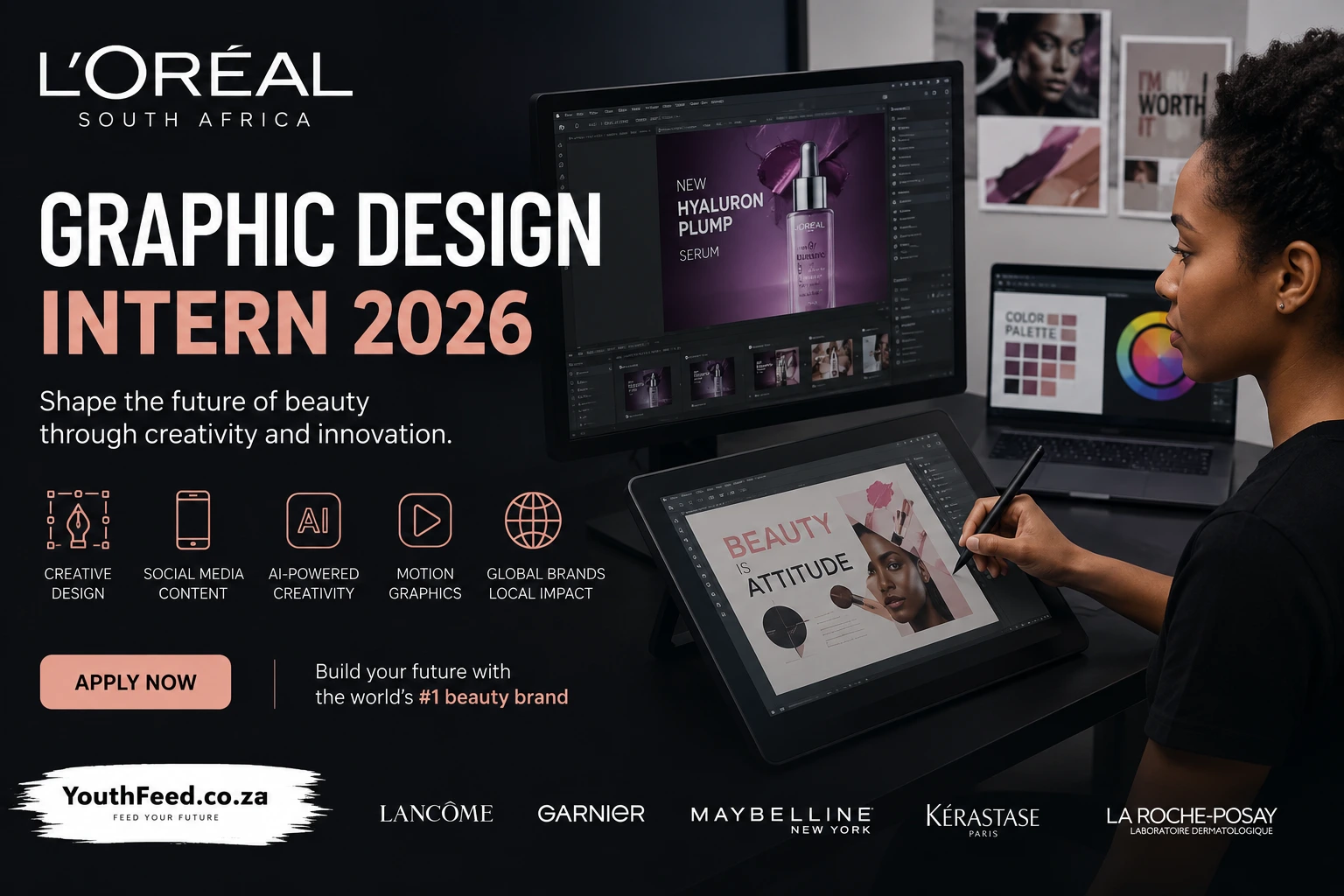
The race for digital creative talent in South Africa is becoming more competitive than many graduates expected. That is one reason the L’Oréal SA Graphic Design Intern 2026 opportunity is attracting unusual attention across student groups, LinkedIn circles, and creative communities right now.
But this internship is trending for another reason too: it reflects how rapidly the creative industry itself is changing.
For years, graphic design internships focused mostly on print layouts, campaign mockups, and static branding work. Now, global beauty companies are asking young creatives to think like social media strategists, motion designers, AI experimenters, trend analysts, and content creators all at once. The new L’Oréal South Africa internship posting captures that shift almost perfectly.
The role is not simply asking for a designer with Adobe skills. It is looking for digitally fluent creatives who understand TikTok culture, reactive content, AI-powered workflows, and the speed of modern beauty marketing. That combination is why the listing is resonating with students and recent graduates trying to figure out what employers actually want in 2026.
For many aspiring creatives, the internship feels less like a traditional corporate placement and more like a preview of the future creative economy.
The Creative Industry Has Changed Faster Than Universities Expected
One of the most interesting things about the L’Oréal SA Graphic Design Intern role is how clearly it reflects the tension between formal education and real-world digital culture.
Graphic design degrees still teach essential foundations: typography, layout systems, branding principles, visual hierarchy, and technical software skills. Those fundamentals still matter. But employers increasingly expect graduates to arrive with additional abilities that are harder to teach in a classroom.
Short-form video editing.
Platform-native storytelling.
Motion graphics.
Trend adaptation.
AI-assisted creative production.
Understanding how content behaves differently on TikTok versus Instagram or YouTube.
The L’Oréal internship description openly acknowledges this new reality. The company specifically wants “digitally native junior designers” who are excited about “AI-powered creativity” and “fast-paced content creation.” That language is important because it signals where major brands believe marketing is heading.
Beauty brands, especially, now operate in an environment where campaigns are no longer built only around polished television commercials or billboard launches. Much of the engagement happens through rapidly evolving digital ecosystems driven by creators, influencers, reactive trends, and algorithm-friendly content.
In that world, speed matters almost as much as creativity.
Why Beauty Brands Are Investing More in Young Digital Creatives
The beauty industry has become one of the internet’s most influential content ecosystems. TikTok tutorials, skincare routines, makeup transformations, creator partnerships, and influencer reviews now shape purchasing behavior globally.
That shift explains why companies like L’Oréal are increasingly recruiting younger creatives who already understand online culture intuitively.
Traditional advertising agencies still play a major role in campaigns, but in-house creative teams are becoming more important. Brands want content creators and designers who can respond quickly to trends, adapt global campaigns for local audiences, and create platform-specific visuals in real time.
The South African market adds another layer to this challenge.
Global campaigns often need localization to feel culturally relevant, visually relatable, and commercially effective in South Africa. The internship specifically highlights adapting international campaign assets for the local market something that requires both technical design ability and cultural awareness.
That matters because localization is becoming a valuable skill across global companies operating in emerging digital markets.
Also apply for Sage Intern: Customer Support 2026
The AI Element Is What Makes This Internship Especially Relevant
Perhaps the most talked-about part of the internship posting is its explicit mention of AI tools and AI creative workflows.
Just two years ago, many creative graduates worried that AI would replace entry-level design jobs entirely. That fear has not disappeared, but the conversation is becoming more nuanced.
Employers are increasingly looking for designers who can work with AI rather than compete against it.
The L’Oréal internship reflects this evolving mindset. Instead of avoiding AI, the company wants interns who are curious about AI-generated content and creative technologies that can improve speed and efficiency.
That is a major signal to the broader market.
Companies no longer see AI familiarity as a niche advantage. It is slowly becoming a standard expectation in digital creative roles.
However, the posting also makes it clear that human creativity still matters deeply. The role emphasizes brand consistency, trend awareness, collaboration, visual storytelling, and creative judgment — areas where human interpretation remains essential.
In many ways, this internship captures the emerging balance inside modern creative work:
AI handles acceleration.
Humans handle meaning.
Social Media Reaction Shows How Competitive Creative Opportunities Have Become
Online reaction to internships like this often reveals wider economic anxieties among graduates.
Across LinkedIn and student forums, many young South Africans are discussing the same concerns:
- How do graduates gain experience without experience?
- What skills actually matter now?
- Are portfolios more important than qualifications?
- Is AI helping creatives or threatening them?
- What industries still offer growth opportunities?
The L’Oréal SA Graphic Design Intern role stands out partly because it appears aligned with where the industry is genuinely moving rather than where it used to be.
That creates excitement but also pressure.
The posting’s long technical skills list may intimidate some applicants. Adobe Creative Suite, motion graphics, social media design, AI proficiency, multimedia specialization, and platform optimization represent a wide range of expectations for an entry-level role.
Still, many graduates may see this as realistic preparation for today’s digital economy rather than excessive demands.
The modern creative job market increasingly rewards versatility.
Read more about How NSFAS Funding Works: A Practical Guide for South African Students
Why Portfolio Culture Matters More Than Ever
One subtle but important detail in the internship listing is the emphasis on portfolios showcasing social media, branding, motion, or digital design work.
That requirement reflects a broader hiring shift happening globally.
For many creative employers, portfolios are becoming more influential than academic transcripts alone.
A strong TikTok edit, motion graphics reel, campaign concept, or Instagram carousel design can sometimes demonstrate more practical capability than classroom marks. Companies want evidence that candidates can create work suited for real-world platforms and audiences.
This especially matters in fast-moving industries like beauty, fashion, entertainment, and lifestyle marketing.
Graduates entering these spaces increasingly need to think like hybrid creatives:
part designer, part storyteller, part strategist, and part content producer.
That hybrid expectation can feel overwhelming, but it also creates opportunities for adaptable creatives who learn continuously outside formal education.
Why This Matters Right Now
The timing of this internship matters because South Africa’s youth employment environment remains extremely challenging, especially for graduates entering creative industries.
Many companies continue reducing traditional junior roles while simultaneously increasing expectations around digital skills and adaptability. At the same time, AI disruption is reshaping conversations about what future creative jobs may look like.
The L’Oréal SA Graphic Design Intern opportunity matters because it offers insight into how major global employers are responding to those changes.
Several trends stand out:
1. AI literacy is becoming mainstream
Creative graduates are no longer expected to ignore AI tools. Employers increasingly want candidates who understand how to use them responsibly and efficiently.
2. Social-first design is now central
Designing for TikTok, Instagram, Meta, YouTube, and e-commerce platforms is becoming a core commercial skill rather than a side specialization.
3. Adaptability is replacing narrow specialization
Modern creatives are expected to handle multiple formats, platforms, deadlines, and campaign types simultaneously.
4. Global companies want local relevance
Localization skills are becoming increasingly valuable in multinational marketing environments.
5. Creative speed matters more than before
Reactive content culture means brands must move quickly while maintaining quality and consistency.
These trends extend far beyond one internship posting. They reflect the broader evolution of creative employment itself.
Also Apply for Motorola Solutions Project Management Intern 2026
The Internship Also Reflects the “Always-On” Marketing Era
Another interesting aspect of the role is its focus on “always-on” content production and “campaign bursts.”
This language reflects how modern marketing has changed structurally.
In the past, campaigns were often seasonal and slower-paced. Today, digital brands operate in a continuous content cycle where audiences expect constant engagement.
Beauty brands especially compete in highly visual environments where attention spans are short and trends shift weekly.
That means creative teams increasingly need junior designers who can:
- adapt quickly,
- respond to trends,
- create multiple asset variations,
- understand analytics-driven design decisions,
- and work across both static and motion formats.
The internship description essentially reads like a blueprint for the next generation of digital creative work.
There Is Also a Bigger Story About South African Talent
Global companies operating in South Africa are paying closer attention to local digital talent than many people realize.
South African creatives often bring strong visual storytelling instincts, cultural adaptability, multilingual communication awareness, and social-media fluency to international brands.
As remote collaboration becomes more normalized, local creatives are competing in increasingly global creative ecosystems.
That creates both opportunity and pressure.
Internships like this can become stepping stones into wider international career pathways, especially for designers who develop strong digital portfolios early.
At the same time, competition is intensifying because more graduates are pursuing creative and content-related careers than ever before.
What Could Happen Next
Several outcomes are likely as internships like this become more common across major brands.
AI-assisted creativity will become standard
Rather than replacing junior designers outright, AI tools will probably become integrated into everyday workflows. Graduates who combine creativity with AI literacy may gain a significant advantage.
Motion design demand will continue growing
Static design alone may no longer be enough for many entry-level creative roles. Short-form video and motion graphics are becoming central to digital engagement strategies.
Portfolio-based hiring could expand further
Employers may increasingly prioritize demonstrated digital work over purely academic credentials, especially in creative industries.
More internships may become multidisciplinary
Future creative internships could blend branding, content strategy, social media management, design, analytics, and AI collaboration into hybrid roles.
South African digital creatives may gain stronger global visibility
As brands search for adaptable and cost-efficient creative talent, South African designers with strong digital fluency could become increasingly attractive internationally.
The Bigger Question Behind the Internship
What makes this opportunity interesting is not simply the company name or the beauty industry association.
It is the broader question the internship raises:
What does it mean to be a creative professional in 2026?
The answer appears increasingly connected to adaptability.
Modern creatives are no longer working inside neat boundaries between graphic design, video editing, content creation, branding, and digital marketing. Those categories are blending together rapidly.
The L’Oréal SA Graphic Design Intern role captures that transformation in real time.
For students preparing portfolios, recent graduates navigating uncertain job markets, and young creatives trying to understand industry expectations, the posting offers a surprisingly clear snapshot of where creative careers may be heading next.
And that may be why so many people are paying attention to it now.
APPLY HERE: L’Oréal SA Graphic Design Intern 2026
FAQ about L’Oréal SA Graphic Design Intern 2026
What qualification is required for the L’Oréal SA Graphic Design Intern 2026 role?
Applicants need a Graphic Design degree, along with strong interest in digital content, branding, and social media creativity.
Does the internship require motion graphics experience?
Basic motion graphics and video editing skills are considered advantageous, especially for short-form and social media content.
Is AI experience necessary for the internship?
The role highlights AI proficiency and curiosity around AI creative tools, suggesting that familiarity with emerging AI workflows is valuable.
What platforms will interns design content for?
The internship includes work for TikTok, Instagram, Meta platforms, YouTube, e-commerce channels, CRM campaigns, and retail media.
Why is this internship getting attention online?
Many graduates see it as a reflection of how creative careers are evolving toward digital-first, AI-assisted, and platform-native content production.