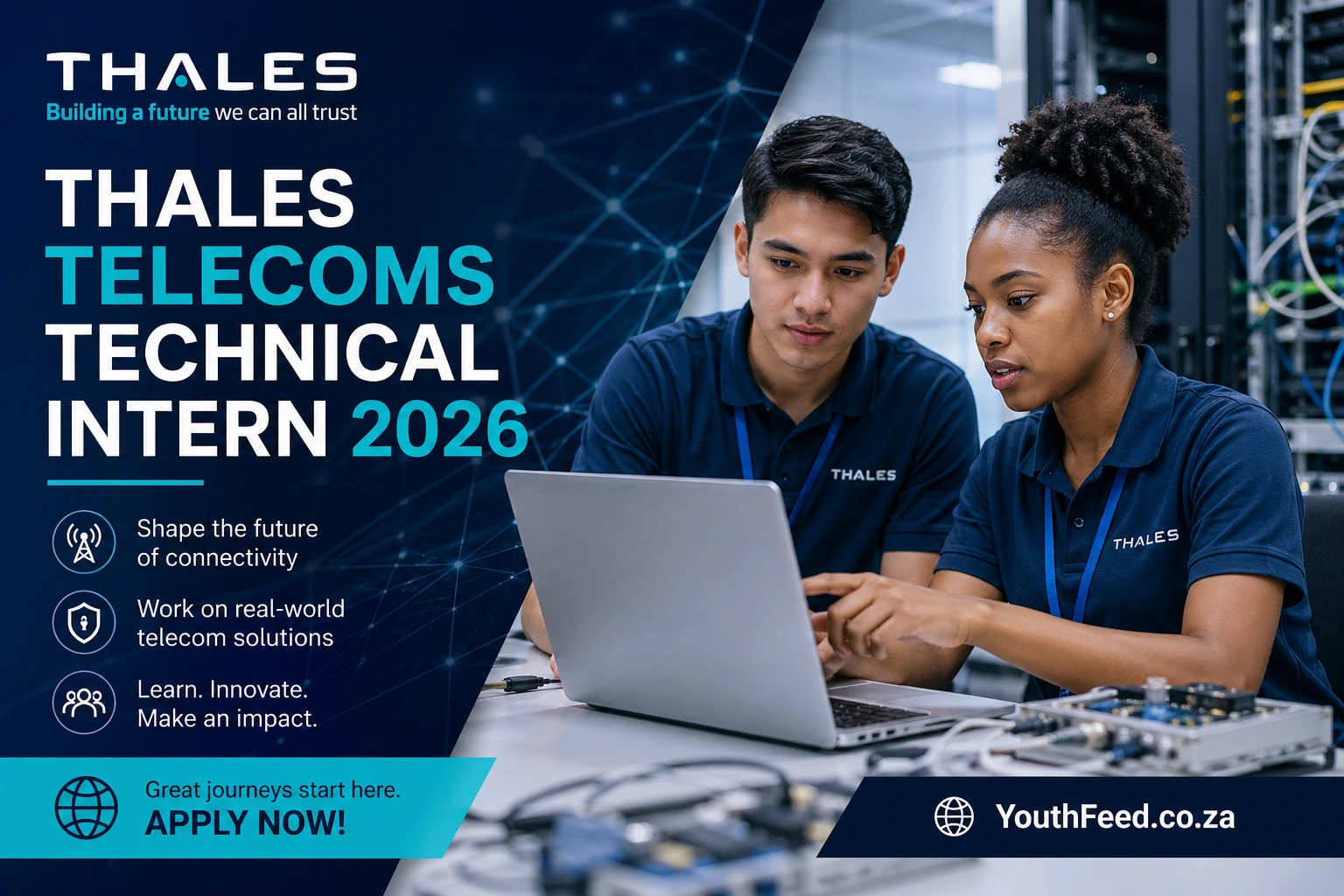
The race for future telecoms talent is accelerating, and the Thales Telecoms Technical Intern programme is arriving at a moment when the industry is under pressure to modernize faster than ever before.
Across South Africa and globally, companies involved in cybersecurity, telecom infrastructure, digital identity systems, and smart technologies are investing heavily in technical graduates who can bridge engineering theory with real-world implementation. That is one reason the Thales internship opportunity is generating growing interest among engineering and computer science students looking for meaningful industry exposure in 2026.
But this internship is not trending simply because it comes from a multinational company.
It is attracting attention because it sits at the intersection of several fast-moving industries: telecoms, digital security, smart card technology, and global connectivity. In a market where many graduates struggle to find technically demanding entry-level roles, programmes linked to advanced telecom systems are increasingly seen as rare career accelerators.
For students pursuing telecommunications, electronics, or computer science qualifications, the opportunity reflects a broader shift happening inside the tech economy. Employers are no longer only searching for academic credentials. They want graduates who understand systems integration, compliance standards, customer implementation processes, and the operational realities of global digital infrastructure.
That is exactly where this internship positions itself.
A Programme Connected to Global Telecom Infrastructure
Thales Group operates across aerospace, defence, transportation, cybersecurity, and digital identity systems, employing tens of thousands of people worldwide.
Its telecom-focused technical internship programme highlights how interconnected the modern communications ecosystem has become.
The role itself focuses on several practical areas:
- Implementation of telecom smart card products and services
- Understanding customer requirements
- Project management exposure
- Telecom standards relating to SIM and USIM systems
- Internal delivery processes
- Compliance and quality management
At first glance, some of these responsibilities may sound highly specialized. But beneath the technical wording is something much broader: exposure to systems that millions of people use daily without even realizing it.
SIM technology, authentication systems, telecom security standards, and network integration remain fundamental to modern mobile communication. As eSIM adoption expands globally and telecom providers push further into digital identity verification, engineers with exposure to secure telecom environments are becoming increasingly valuable.
That helps explain why internships like this are attracting attention far beyond traditional telecom engineering circles.
How the Industry Reached This Point
The telecom sector has changed dramatically over the last decade.
Previously, telecommunications careers were often associated with network maintenance, infrastructure deployment, or traditional mobile operations. Today, the sector overlaps heavily with cybersecurity, fintech, cloud services, AI-driven networks, and digital identity management.
Smart card technology itself has evolved beyond physical SIM cards. Companies operating in this space are now dealing with:
- Embedded SIM systems
- Remote authentication
- Secure digital identities
- Encrypted communications
- Compliance-heavy digital ecosystems
This evolution has increased demand for technically adaptable graduates who understand both engineering principles and operational execution.
Internship programmes tied to multinational firms are therefore becoming more strategic than symbolic. They are no longer just “experience opportunities.” In many cases, they serve as early pipelines into highly specialized industries where practical exposure matters as much as classroom learning.
For South African graduates especially, opportunities connected to globally recognized companies carry additional weight because they may open future pathways into international mobility, specialized certifications, or cross-border projects.
Thales openly emphasizes career mobility in its recruitment messaging, noting that employees often develop careers both locally and internationally across multiple fields.
That kind of positioning matters in 2026 because younger professionals are increasingly prioritizing long-term growth potential over short-term employment security.
ALSO APPLY FOR : Fraser Alexander SHEQ Programme 2026
Why Technical Internships Are Becoming More Competitive
The broader graduate employment landscape also explains why programmes like the Thales Telecoms Technical Intern are gaining visibility online.
Across South Africa, graduate unemployment remains a major concern, even among degree holders. At the same time, employers continue reporting shortages in highly specialized technical skills.
This contradiction has created an intense focus on internships that provide:
- Recognized industry exposure
- Technical implementation experience
- Project coordination skills
- Compliance and standards knowledge
- Exposure to global systems
In other words, companies are increasingly searching for graduates who can contribute inside structured, process-driven environments from an early stage.
The Thales role reflects that reality clearly.
The internship does not simply emphasize technical knowledge. It also highlights communication ability, autonomy, organization, leadership traits, and adherence to compliance systems like ISO and GSMA SAS standards.
That combination reflects a broader hiring trend across global tech industries: technical ability alone is no longer enough.
Companies want engineers who can communicate, coordinate, manage priorities, and operate inside regulated environments.
The Growing Importance of Telecom Security
Another reason this internship stands out is the rising importance of telecom security itself.
As mobile systems become more integrated with banking, government services, identity verification, and enterprise platforms, telecom infrastructure is increasingly viewed as critical national infrastructure.
That has changed how companies recruit.
Cybersecurity awareness, compliance knowledge, and secure implementation practices are now deeply connected to telecom engineering roles.
Even entry-level programmes are increasingly introducing graduates to:
- Security frameworks
- Compliance procedures
- Risk management systems
- Secure customer delivery processes
The Thales internship reflects this evolution through its emphasis on standards compliance, confidentiality agreements, and operational procedures.
For students interested in cybersecurity-adjacent careers, that exposure could become especially valuable over time.
Public Reaction and Online Interest
Graduate opportunities linked to international companies consistently generate strong engagement online, but telecom-focused internships have seen growing interest recently for a few specific reasons.
First, many students are actively searching for roles that combine engineering with future-facing technologies.
Second, internships connected to cybersecurity and digital systems are increasingly viewed as more resilient career paths amid global economic uncertainty.
Third, graduates are becoming more selective about where they gain their first experience. Brand reputation, international exposure, and career mobility now matter heavily in application decisions.
On social media and career forums, students frequently discuss concerns about gaining “real” technical exposure rather than administrative internship experience with limited growth.
That is partly why technically structured programmes attract stronger attention.
The Thales internship also appeals to candidates interested in working on systems with real-world scale and operational relevance rather than isolated academic projects.
ALSO APPLY FOR: Afrimat Sales Internship 2026
Why This Matters Right Now
The timing of this opportunity is particularly significant.
South Africa’s digital economy is expanding rapidly, while telecom operators and technology providers continue modernizing infrastructure to support growing data demand, digital payments, cloud systems, and secure mobile services.
At the same time, businesses globally are investing heavily in secure communications technologies due to rising cyber threats and increasing regulatory pressure.
This creates a strong environment for graduates entering telecom engineering and secure technology fields.
The Thales Telecoms Technical Intern programme matters because it reflects where technical hiring is heading:
- Cross-functional engineering skills
- Security-conscious implementation
- Standards compliance
- Project coordination
- Global operational awareness
It also highlights how modern engineering careers increasingly blend technical execution with communication and business understanding.
For graduates, this shift changes how employability is measured.
Employers are looking for adaptable professionals capable of learning quickly inside complex systems rather than narrowly specialized candidates with only theoretical knowledge.
The Human Side of the Opportunity
One detail often overlooked in corporate internship advertisements is workplace culture.
Yet younger professionals increasingly care about whether companies encourage long-term development or simply treat internships as temporary labour pipelines.
Thales places significant emphasis on career growth, mobility, and internal development opportunities.
That messaging aligns with changing workforce expectations.
Graduates entering the workforce today are thinking differently compared to previous generations. Many prioritize:
- Career progression
- Skills portability
- International exposure
- Flexible career pathways
- Long-term learning opportunities
The company’s statement that it provides “careers and not only jobs” directly targets this mindset.
Whether every employee experiences that vision equally is always open to interpretation, but the broader message reflects how global employers are adapting recruitment strategies to appeal to younger technical talent.
The Skills That Could Matter Most
Interestingly, some of the most important requirements listed for the internship are not purely technical.
The role emphasizes:
- Organization
- Assertiveness
- Leadership
- Communication skills
- Commitment
- Autonomy
That combination reveals an important industry truth.
Modern telecom and technology environments are deeply collaborative. Engineers regularly work across compliance teams, implementation units, project managers, clients, and operational departments.
Graduates who can explain technical issues clearly often progress faster than those with strong technical knowledge but weak interpersonal communication.
This shift is changing how students prepare for technical careers.
Soft skills are no longer treated as optional additions. In many cases, they determine who succeeds inside multinational environments.
ALSO APPLY FOR FlySafair Graduate Intern 2026
What Could Happen Next
Several broader developments could increase the relevance of programmes like this over the next few years.
Expansion of Secure Digital Identity Systems
Governments and private companies worldwide continue investing in secure authentication technologies. Telecom-linked security systems are likely to become even more important as digital identity ecosystems expand.
Greater Demand for Telecom Cybersecurity Skills
As cyber threats become more sophisticated, telecom security expertise may become one of the fastest-growing technical specializations globally.
Increased Competition for Technical Graduate Roles
More students are entering technology-related fields, but companies continue prioritizing candidates with practical implementation experience. Structured internships may therefore become even more competitive.
More Integration Between Telecom and Fintech
Mobile systems increasingly overlap with payments, digital banking, and identity verification. Engineers with telecom systems knowledge could find opportunities beyond traditional network environments.
International Mobility Opportunities
Multinational companies are likely to continue developing global mobility programmes to address technical talent shortages across regions.
For graduates entering the industry now, early exposure to multinational operational standards may provide long-term advantages.
APPLY HERE: Thales Telecoms Technical Intern 2026
Frequently Asked Questions
What is the Thales Telecoms Technical Intern programme?
It is a technical internship opportunity focused on telecom smart card products, implementation processes, telecom standards, and project management exposure within Thales.
Who can apply for the internship?
The programme targets students or graduates from engineering-related fields such as telecommunications, computer science, or electronics.
What skills does Thales look for?
The company emphasizes technical understanding, communication skills, organization, leadership potential, and the ability to work autonomously.
Why is telecom security becoming important?
Modern telecom systems support banking, identity verification, and digital communication, making secure infrastructure increasingly critical.
Does Thales offer international career opportunities?
Thales highlights internal mobility and global career development opportunities across multiple countries and technical fields.
Final Thoughts
The Thales Telecoms Technical Intern opportunity represents more than another graduate recruitment announcement.
It reflects a broader transformation happening across telecoms, cybersecurity, and digital infrastructure industries.
Companies are searching for technically capable graduates who can operate inside secure, globally connected systems while also managing communication, compliance, and customer-facing responsibilities.
For aspiring engineers and technology professionals, internships linked to these environments may become increasingly important stepping stones into future-focused careers.
The growing interest surrounding this programme also reveals something larger about the current graduate market: students are looking for opportunities that offer relevance, mobility, and meaningful technical exposure in industries that are still expanding.
In a rapidly digitizing economy, telecom infrastructure remains foundational to how societies communicate, transact, and secure information.
That means opportunities connected to this sector are unlikely to lose relevance anytime soon.