Unemployment remains one of the biggest challenges facing South Africans today—especially among youth and those without formal qualifications. Many people are actively searching for opportunities that don’t just provide income, but also offer skills development and a pathway into stable work. The difficulty is knowing where to find legitimate programmes, how to apply correctly, and how to stand out among thousands of applicants.
The SANBI Greening Programme 2026 is one such opportunity—but many eligible applicants miss out simply because they don’t fully understand the process or requirements.
This guide breaks everything down clearly: what the programme is, who qualifies, how to apply successfully, and how to improve your chances of getting selected.
What Is the SANBI Greening Programme 2026?
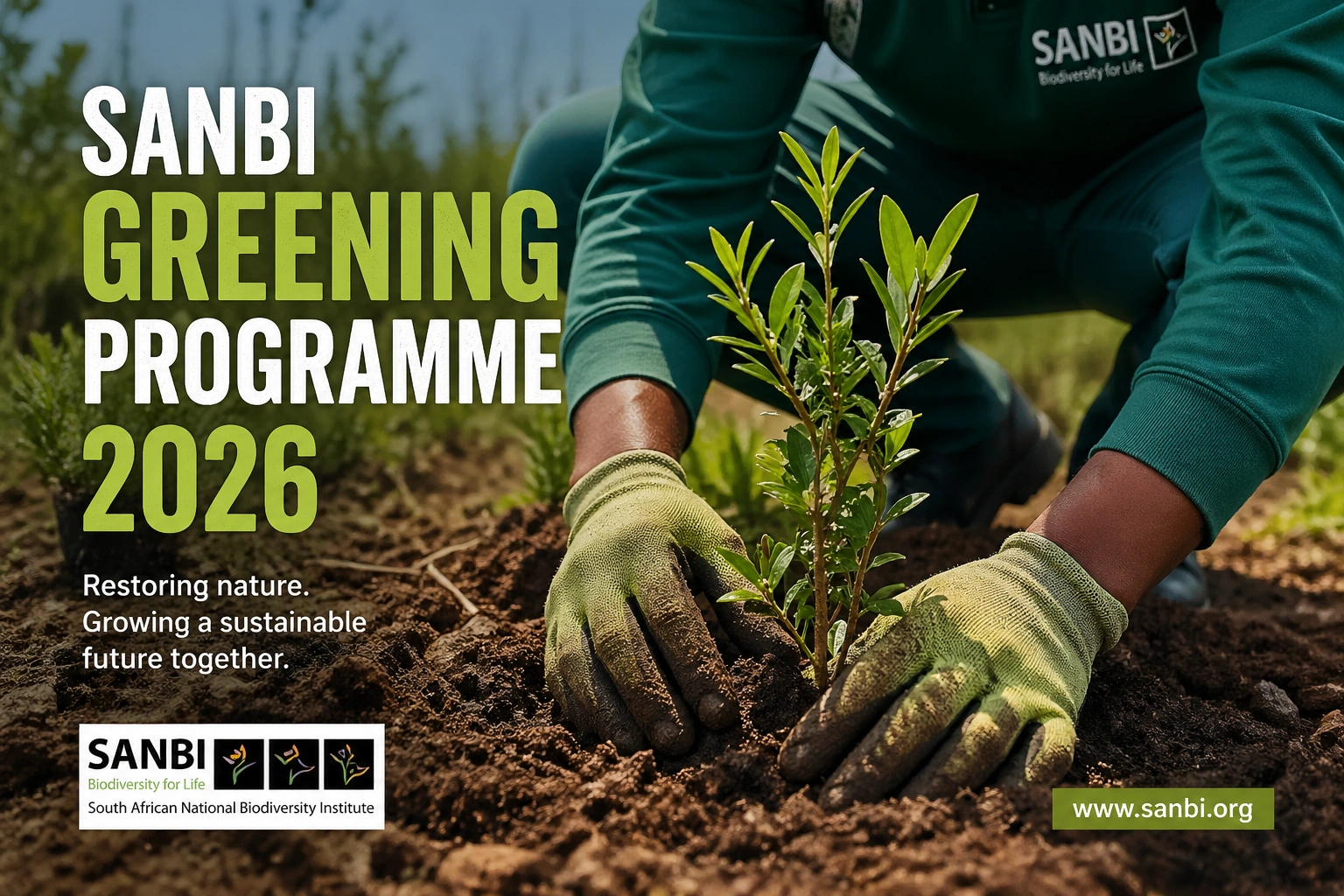
The SANBI Greening Programme 2026 is part of the Expanded Public Works Programme (EPWP), designed to create short-term employment opportunities while improving environmental sustainability across South Africa.
It places participants in national botanical gardens and conservation sites where they contribute to:
- Environmental maintenance
- Biodiversity conservation
- Garden and landscape development
- Community upliftment projects
The programme is open to both skilled and unskilled individuals, making it accessible even if you don’t have formal qualifications.
Key Details at a Glance
- Application Deadline: 30 April 2026 (16:00)
- Contract Duration: Until 31 March 2027
- Stipend:
- Unskilled: R150 per day
- Skilled: R200 per day
- Location: Multiple botanical gardens nationwide
Why This Issue Matters
Opportunities like the SANBI Greening Programme 2026 are more than just temporary jobs—they play a critical role in addressing both economic and environmental challenges.
Here’s why this matters in real life:
- Income support: Many households rely on short-term work to survive
- Skill development: Participants gain hands-on experience in landscaping, conservation, and maintenance
- Environmental protection: The programme contributes to preserving South Africa’s biodiversity
- Future employability: Work experience increases your chances of getting permanent jobs later
For many applicants, this programme can be the first step toward long-term employment or a career in environmental work.
Locations and Available Opportunities
The programme runs across several provinces, giving applicants a chance to apply within their local area.
Gauteng
- Pretoria National Botanical Garden
- Walter Sisulu National Botanical Garden (Roodepoort)
- National Zoological Garden (Pretoria)
Limpopo
- Thohoyandou National Botanical Garden
- Mphaphuli Cycad Nature Reserve
- Mokopane BCC
KwaZulu-Natal
- Pietermaritzburg National Botanical Garden
Mpumalanga
- Lowveld National Botanical Garden (Mbombela)
Free State
- Free State National Botanical Garden (Bloemfontein)
Western Cape
- Kirstenbosch
- Harold Porter
- Karoo Desert Botanical Gardens
Northern Cape
- Hantam National Botanical Garden
Eastern Cape
- Kwelera National Botanical Garden
Important: You must apply for a location within your local municipality.
Who Qualifies for the SANBI Greening Programme 2026?
Before applying, make sure you meet the minimum requirements.
Basic Requirements
You must:
- Be a South African citizen
- Live within the local municipality of the garden
- Provide proof of residence
- Be physically fit for outdoor/manual work
- Be willing to work both independently and in a team
- Be available for interviews if shortlisted
Skilled vs Unskilled Applicants
Unskilled applicants do not need prior experience.
Skilled applicants should have experience in areas such as:
- Chainsaw or brush cutter operation
- Herbicide application
- Painting, paving, or bricklaying
- General maintenance or construction
Duties and Responsibilities
If selected, your day-to-day work will involve practical, hands-on tasks such as:
- Maintaining gardens and landscapes
- Removing invasive plant species
- Cleaning and maintaining pathways
- Assisting with tree planting
- Supporting conservation activities
- Participating in environmental protection initiatives
This is physically demanding work, so being fit and prepared is essential.
Step-by-Step: How to Apply Successfully
Applying correctly is where many people go wrong. Follow these steps carefully to avoid disqualification.
Step 1: Get the SANBI Application Form
Download the official SANBI application form from the appropriate source.
Make sure you:
- Fill it in clearly
- Double-check all details
Step 2: Prepare Your Documents
You must include:
- Completed SANBI application form
- Updated CV (maximum 2 pages)
- Proof of residence
Tip: Keep your CV simple and relevant—focus on practical skills.
Step 3: Use the Correct Reference Number
Each location has its own reference number.
- Applying with the wrong reference number can disqualify you
- Double-check before submitting
Step 4: Submit Your Application
You can apply in two ways:
Email:
- Send to: epwp@sanbi.org.za
OR
Hand/Post Submission:
- Submit to the relevant botanical garden office
ALSO VISIT: https://www.sanbi.org
Step 5: Apply Before the Deadline
- Closing date: 30 April 2026 at 16:00
- Late applications are not accepted
ALSO APPLY FOR: Transnet Train Assistants Programme 2026
Step 6: Wait for Feedback
- If you don’t hear back within 30 days, your application was unsuccessful
Best Practices Experts Recommend
To improve your chances of being selected for the SANBI Greening Programme 2026, follow these proven strategies:
1. Tailor Your CV
Highlight:
- Any gardening or outdoor work
- Physical labour experience
- Volunteer work
Even informal experience counts.
2. Show Reliability
Employers value:
- Punctuality
- Consistency
- Willingness to learn
Mention these qualities in your CV or application.
3. Apply Early
Don’t wait until the last day. Early applications:
- Avoid technical issues
- Show seriousness
4. Be Honest About Skills
If you’re applying as skilled:
- Only list skills you can prove
- Be ready to demonstrate them
5. Prepare for Physical Work
This is not an office job. Be ready for:
- Outdoor conditions
- Manual labour
- Long hours on your feet
Mistakes People Often Make
Many applicants lose out due to simple, avoidable errors.
1. Submitting Incomplete Applications
Missing documents = automatic rejection.
2. Using the Wrong Reference Number
This is one of the most common mistakes.
3. Applying Outside Your Municipality
You must live near the location you apply for.
4. Overloading Your CV
Keep it short and relevant (maximum 2 pages).
5. Missing the Deadline
Late applications are not considered—no exceptions.
6. Ignoring Instructions
Not following application guidelines can cost you the opportunity.
FAQ:
1. Can I apply if I have no experience?
Yes. The programme accepts unskilled applicants, making it accessible to beginners.
2. How much will I earn?
Unskilled: R150 per day and Skilled: R200 per day
3. Can I apply to multiple locations?
You should only apply to a location within your local municipality to avoid disqualification.
Why You Should Consider Applying
The SANBI Greening Programme 2026 offers more than just temporary work:
- A steady daily income
- Real-world experience
- Exposure to environmental careers
- Opportunities to build practical skills
For many participants, it becomes a stepping stone to permanent employment or further opportunities in conservation and maintenance.
Final Thoughts and Practical Advice
If you’re unemployed and looking for a meaningful opportunity, the SANBI Greening Programme 2026 is worth serious consideration. But success depends on how well you prepare and apply.
Here’s what you should do next:
- Download and complete the application form immediately
- Prepare a clean, simple CV
- Double-check your reference number
- Submit before the deadline
- Ensure all required documents are included
Small details can make a big difference. Taking the time to apply properly could be the step that opens doors to income, skills, and future opportunities.